Pick the forklift course that matches the truck your worker will actually drive. Online training covers the theory, but in Alberta the employer must still have a competent worker watch the operator demonstrate competency and then authorize them. Here is how to choose, and what a complete forklift qualification looks like.
Short answer: choose the course that matches the type of lift truck your worker will operate. For most Alberta warehouses and yards that is a sit-down counterbalance forklift. Pallet jacks, reach trucks and walkie stackers handle differently, so they need their own training. Online training covers the theory. It does not finish the job on its own.
Under the Alberta OHS Code, a worker may not operate powered mobile equipment, which includes forklifts, until they are trained, have shown their competency to a competent worker the employer designates, know the equipment's operating instructions, and are authorized by the employer. So a complete forklift qualification is online theory plus a hands-on evaluation on your equipment, at your site.
Key facts about forklift training in Alberta
- Forklifts are powered mobile equipment under Part 19 of the Alberta OHS Code.
- Before operating, a worker must be trained, demonstrate competency to a competent worker designated by the employer, be familiar with the operating instructions, and be authorized by the employer (section 256).
- A worker in training may operate under the direct supervision of a designated competent worker.
- Before each use, the operator must do a visual inspection of the equipment and the area around it (section 257).
- Online courses deliver the knowledge part. The practical evaluation is done by the employer, on the truck the worker will use.
- Training is truck-specific. A counterbalance card does not make someone competent on a reach truck or a telehandler.
- Canadian (CAN) courses are written for Canadian workplaces. OSHA versions are written for US rules.
Start with the right forklift course
Online, self-paced forklift theory with a certificate. Pair it with your own hands-on evaluation and written authorization.
See Forklift Training (Counterbalanced)What types of forklifts are there?
Lift trucks come in many shapes, but most Alberta workplaces use one or more of these four. Each has a different centre of gravity, different controls and different hazards, which is why training has to match the truck.
Sit-down counterbalance forklift
This is the forklift most people picture. The operator sits in the truck, the forks are out front, and a heavy counterweight at the back balances the load. They run on propane, diesel, gasoline or electric power, and they work indoors and out. The main hazards are tip-overs, especially when turning with a raised load or on a slope, and striking pedestrians. Most general forklift courses are written for this truck.
Stand-up and reach trucks
Reach trucks are built for narrow aisles and high racking. The operator stands, and the forks or mast reach forward to pick up and place loads. Stand-up counterbalance trucks are similar in stance but use a counterweight. These trucks steer and brake differently from a sit-down forklift, and the operator is more exposed if the truck hits racking. High lifts make load stability and rack damage bigger issues.
Pallet jacks (electric and manual)
A pallet jack lifts a pallet just off the floor to move it. Manual jacks are pumped by hand. Electric (powered) pallet jacks, including rider models, move under their own power. People often treat them as simple tools, but powered jacks cause crushed feet, pinned workers against walls and dock edges, and falls off docks. A powered pallet jack is self-propelled equipment that moves material, so treat its training seriously.
Walkie stackers
A walkie stacker is a walk-behind truck with a mast. It can lift pallets onto racking, like a small forklift, but the operator walks with it. It combines the pinch and crush hazards of a pallet jack with the load-stability hazards of a raised mast. It needs its own training and evaluation.
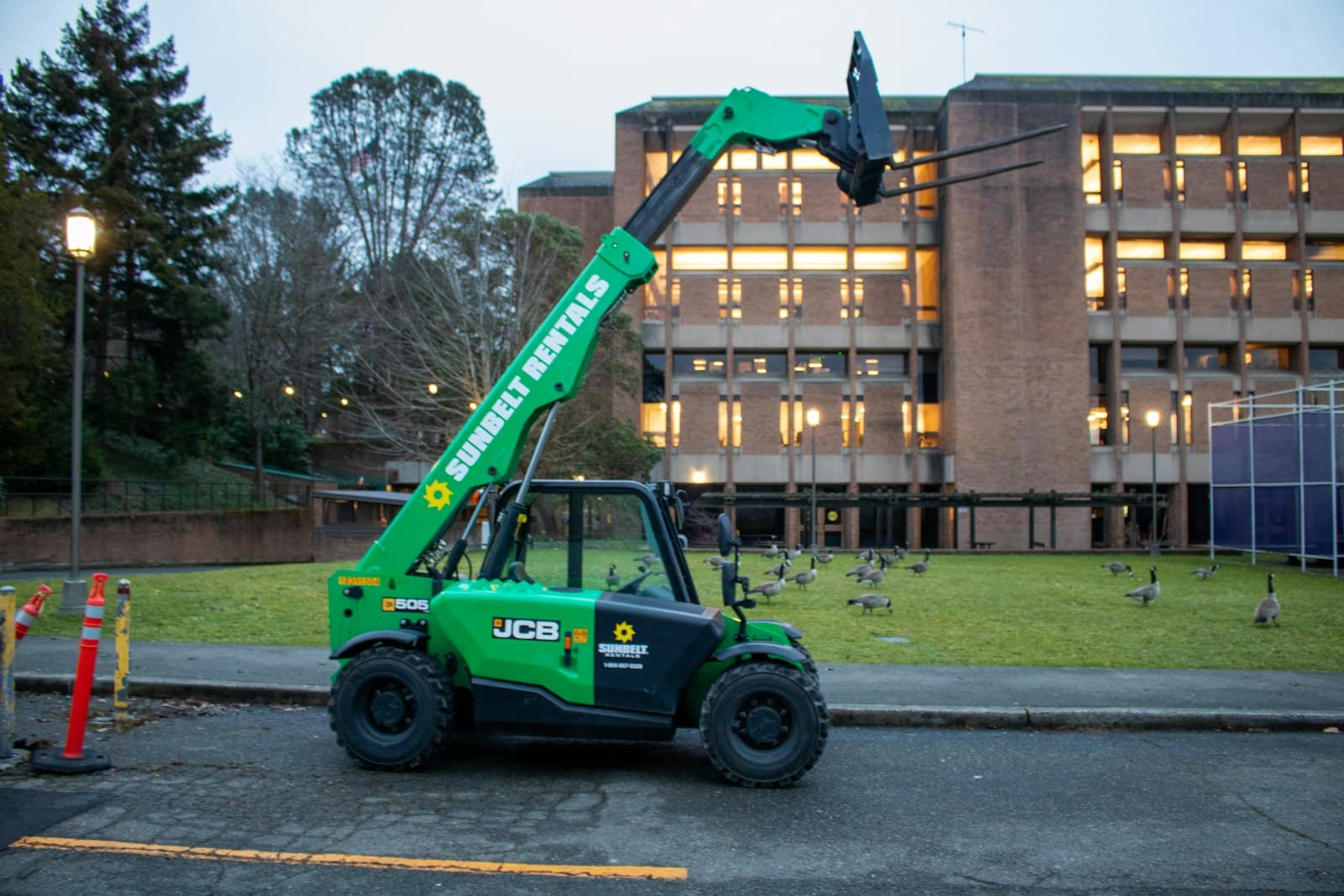
Also on some sites: telehandlers (variable reach forklifts) and rough terrain forklifts. These are different machines again and need their own course and evaluation.
Which forklift course do I need?
Start with the truck, not the course title. Ask three questions:
- What type of truck will this worker operate? Match the course to it.
- Where will they work? Canadian workplaces should use a Canadian (CAN) course. Workers going to US sites may need an OSHA version.
- What else is part of the job? Load handling, daily inspections and battery charging each have their own training.
Here are the forklift and lift truck courses we carry, grouped by what they are for:
Sit-down counterbalance operators
- Forklift Training (Counterbalanced)
- Sit Down Forklift - Operator Safety (CAN)
- Forklift Safety: Industrial Counterbalance Lift Trucks
- Forklift Training
Pallet jack operators
Add-on and refresher topics
- Forklift Operator - Loadhandling
- Forklift - Safe Driving
- Forklift - Inspection and Maintenance
- Battery and Charger Safety
- Forklift Training: Non-Operator Safety (for people who work around forklifts)
Telehandlers
We don't currently carry a stand-up reach truck or walkie stacker course. If your workers run those trucks, contact us and our safety experts will help you find training that fits, and set up the practical evaluation.
Is online forklift training valid in Alberta?
Yes, as the training part of the qualification. The Alberta OHS Code does not say training must be in a classroom. It says the worker must be trained, must demonstrate competency to a competent worker designated by the employer, must be familiar with the equipment's operating instructions, and must be authorized by the employer. An online course is a good way to deliver consistent theory and to keep a record of it.
What online training cannot do is watch someone drive. That is the employer's job. Be wary of any provider that promises a "forklift licence" from an online course alone. Alberta does not issue a government forklift licence. The worker's qualification is their training, plus the employer's evaluation and authorization, on file.
What does the hands-on practical evaluation involve?
The evaluation is done by a competent worker the employer designates: someone who knows the truck and the site well enough to judge safe operation. It should happen on the truck the worker will use, in the conditions they will work in. A practical evaluation usually covers:
- A pre-use inspection, including forks, chains, mast, hydraulics, tires, brakes, steering, horn, lights and seat belt.
- Checking the surrounding area for people, overhead hazards and floor conditions.
- Travelling forward and in reverse, loaded and empty, with good visibility habits.
- Picking up, carrying and placing loads at floor level and at height.
- Working on ramps or slopes and at dock edges, if the job includes them.
- Parking and shutting down safely: forks lowered, controls neutral, brake set.
- Refuelling or battery charging, if the operator will do it.
Write it down. Record who was evaluated, on which truck, by whom, what they did and the result. Then issue a written authorization for that truck type. Until the evaluation is complete, a worker in training may operate only under the direct supervision of a designated competent worker.
What are the operator's duties once qualified?
Qualification is not the end of it. The OHS Code puts duties on the operator every shift. Before operating, the operator must visually inspect the equipment and the area around it. While operating, they must operate safely and keep full control at all times. They must wear the seat belt and other safety equipment, and keep the cab and floor clear of objects that could jam the controls or trip someone. They must report conditions that affect safe operation to the employer.
Supervisors should back this up. Check that inspection records are done, not just signed. Watch for speeding, carrying loads high and people riding on forks. Retrain when you see a pattern.
Do workers who don't drive forklifts need training?
Yes, in a different way. Most forklift injuries involve someone on foot: a picker in the aisle, a driver at the dock, or a visitor who walks behind a reversing truck. Everyone who works around lift trucks should know how forklifts move, where the blind spots are, and why they should never walk under a raised load or stand between a truck and a fixed object.
Your hazard assessment should cover pedestrian traffic, not just operators. Common controls include marked walkways, mirrors at blind corners, speed limits, horns at intersections, and a rule that pedestrians make eye contact with the operator before crossing. A short non-operator course is an easy way to get this message to the whole crew and keep a record of it.
What is the difference between CAN and OSHA forklift courses?
CAN courses are written for Canadian workplaces. They use Canadian terms and point workers to Canadian legislation and standards. OSHA courses are written for United States rules. US federal rules require forklift operator training and an evaluation of the operator's performance in the workplace, repeated at least every three years.
For an Alberta workplace, pick a CAN course. The safe operating practices are much the same, but the legal framework your auditor and your workers need to understand is Alberta's. Choose an OSHA course only for workers who will operate at US sites.
How often should forklift training be refreshed?
The Alberta OHS Code does not set a fixed renewal date for forklift training. Many employers and COR programs use a three-year refresher cycle as good practice. Retrain sooner when a worker changes truck types, after a near miss or incident, when an evaluation shows unsafe habits, or when the workplace changes, such as new racking or a new building layout.
Keep the certificate, the evaluation record and the authorization together in each worker's file. That is what a COR auditor looks for when they sample your training records.
Get your operators trained this week
Buy a seat, send the login, and your worker can start the theory today. We can help you set up the practical evaluation too.
Browse online safety coursesFrequently asked questions
Do I need a forklift licence in Alberta?
Alberta does not issue a government forklift licence. Under the Alberta OHS Code, a worker must be trained, demonstrate competency to a competent worker designated by the employer, be familiar with the operating instructions, and be authorized by the employer before operating.
Is online forklift training enough in Alberta?
Online training covers the theory. The worker still has to demonstrate competency on the actual equipment to a competent worker designated by the employer, and be authorized by the employer, before operating alone.
Which forklift course should I take?
Take the course that matches the truck you will operate. Sit-down counterbalance forklifts, reach trucks, pallet jacks, walkie stackers and telehandlers each handle differently and need their own training.
Does a pallet jack need training?
Yes. Powered pallet jacks are self-propelled equipment that move material, and they cause crush and pinning injuries. Operators should be trained, evaluated and authorized like any other lift truck operator.
What is the difference between CAN and OSHA forklift training?
CAN courses are written for Canadian workplaces and Canadian legislation. OSHA courses are written for US rules. Alberta workers should take a CAN course unless they will work at US sites.
Who can do the forklift practical evaluation?
A competent worker designated by the employer, meaning someone with the knowledge, training and experience to judge safe operation of that truck at that site.
How often does forklift training need to be renewed in Alberta?
The Alberta OHS Code does not set a fixed renewal period. Many employers use a three-year refresher cycle, and retrain sooner after an incident, a change in truck type or unsafe operation.
Can a new operator use a forklift while still in training?
Yes, but only under the direct supervision of a competent worker designated by the employer, as allowed by section 256(2) of the Alberta OHS Code.