
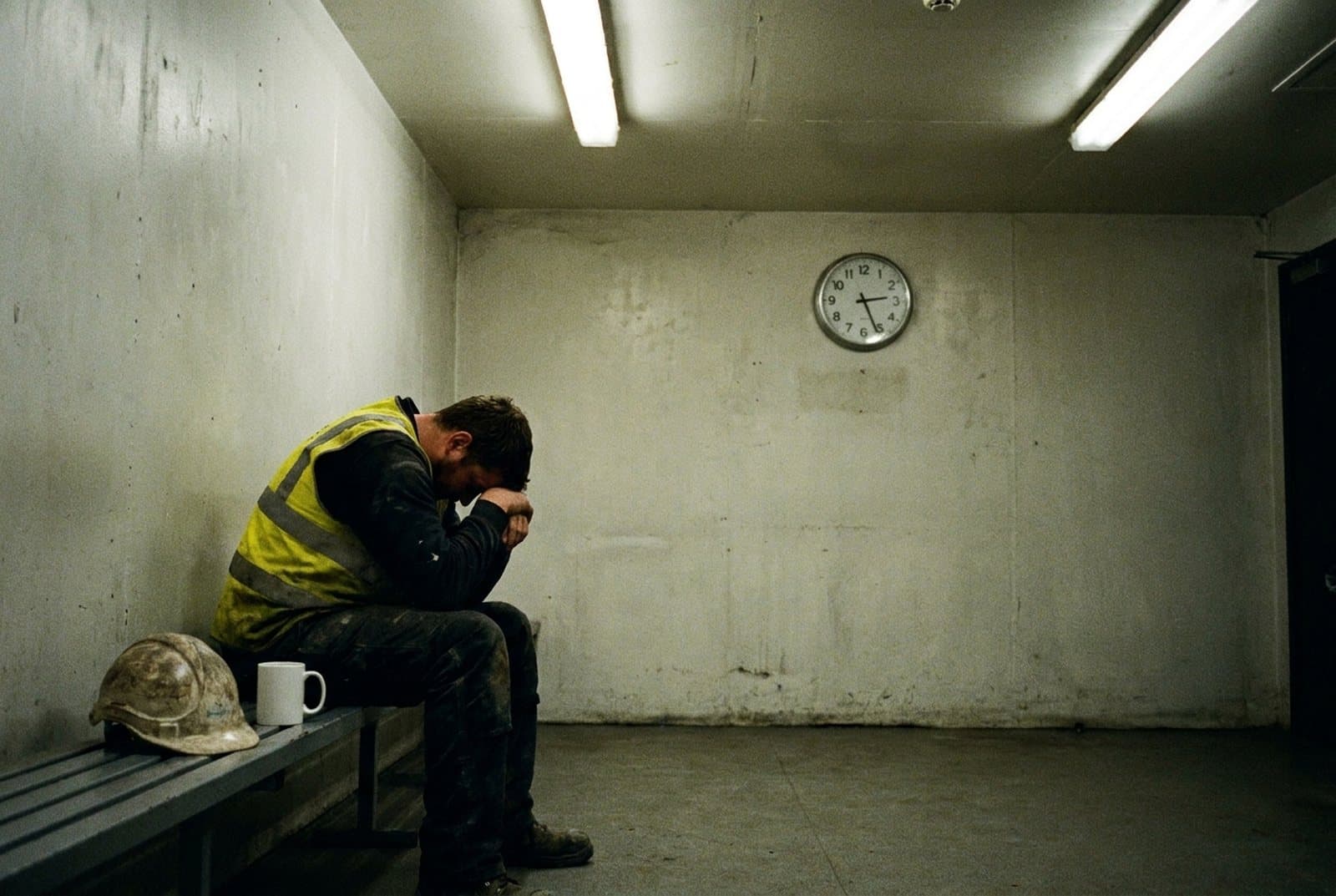
Workplace fatigue is more than feeling tired. It slows reactions, weakens judgement and can put a worker to sleep on the job. Here is how to spot it, what causes it, how Alberta OHS treats it, and the controls that work for employers and workers.
Workplace fatigue is a state of deep tiredness that lowers a worker's physical and mental ability to do the job safely. It usually comes from too little sleep, long or irregular hours, night work, or hard physical or mental work. In Alberta, fatigue is treated as a hazard like any other: employers must assess it and control it, and workers have a part to play too.
This guide is for people who work on shift, on site, in the plant or in the shop. It covers the signs of fatigue, what causes it, where it fits in Alberta OHS law, and the controls that make a real difference.
Key facts about workplace fatigue
- Fatigue reduces mental and physical ability, weakens judgement and concentration, slows reaction time and can increase risk-taking.
- A fatigued worker can fall asleep briefly without meaning to.
- Most adults need 7 to 9 hours of sleep a night, according to Alberta OHS guidance.
- Night workers and people whose shifts start before 6 a.m. tend to sleep less than day workers.
- Our bodies are naturally more tired between midnight and 6 a.m., and again between 1 p.m. and 3 p.m.
- The Alberta OHS Code requires employers to identify and control existing and potential hazards. Fatigue is not named in the Code, but Alberta's guidance treats it as a workplace hazard.
- Long shifts also add to the time a worker is exposed to noise, chemicals and other hazards.
What is workplace fatigue?
Workplace fatigue is tiredness that affects how safely you can work. The Canadian Centre for Occupational Health and Safety (CCOHS) describes fatigue as feeling very tired, weary or sleepy because of lost sleep, long periods of mental or physical work, or ongoing stress.
Being a bit tired at the end of a shift is normal. Fatigue is different. It builds up over days and does not go away with a coffee or a short break. Only proper sleep fixes it. When a worker is short on sleep night after night, the lost sleep adds up into what is often called sleep debt.
Fatigue matters most where a lapse can hurt someone. Think of running equipment, working at heights, handling loads, working near moving parts or doing a task that needs close attention to detail.
What are the signs of fatigue at work?
The signs of fatigue show up in how people look, act and work. Alberta's guidance notes that a fatigued worker may seem sleepy, irritable, sad or oddly giddy. CCOHS adds weariness, poor concentration, low motivation and headaches.
Signs you may notice in yourself
- Heavy eyelids, yawning, or nodding off during quiet moments
- Reading the same line or instruction more than once
- Forgetting a step you normally do without thinking
- Feeling short-tempered or flat
- Headaches or feeling run down, and catching colds more often
Signs you may notice in a co-worker
- Slower reactions or clumsy movements
- More small mistakes and near misses
- Taking shortcuts or risks they normally wouldn't
- Trouble following a conversation or a toolbox talk
- Irritability or withdrawing from the crew
If you see someone who is too tired to work safely, speak up. Tell your supervisor. Moving a worker off a safety-sensitive task is a normal control, not a punishment.
Give your crew 30 minutes of fatigue awareness
Fighting Fatigue in the Workplace covers the causes and hazards of fatigue, how to reduce it at work, and sleep, diet and exercise habits. Online, 80% to pass.
See Fighting Fatigue in the WorkplaceWhat causes fatigue at work?
Most workplace fatigue comes down to not enough sleep, or sleep at the wrong time. Work patterns are a big driver, but life outside work and health play a part too.
- Shift work. Rotating shifts keep resetting the body clock, so it never fully settles.
- Night work. Daytime sleep is usually shorter and lighter than night sleep, and the body is at its lowest point in the early hours.
- Long hours and many days in a row. Extended shifts leave less time to sleep, eat and recover.
- Early starts. Shifts that begin before 6 a.m. tend to cut sleep short.
- Sleep debt. A little lost sleep each night adds up over a rotation.
- Heavy physical or mental work, heat, noise and poor lighting.
- Health factors, such as sleep disorders like sleep apnea, and some medications.
- Caffeine, alcohol and nicotine, which can all reduce sleep quality.
- Life outside work: a long commute, young children, a second job or stress at home.
Seasonal pressure counts too. After a busy holiday stretch, many crews come back short on sleep and easily distracted. We covered that in our post on the holiday hangover, fatigue and distraction.
Is fatigue a hazard under Alberta OHS?
Yes, in practice. The Alberta OHS Code does not list fatigue by name, but it requires employers to find and control all existing and potential hazards, and Alberta's own OHS guidance treats fatigue and extended work hours as a hazard.
Under section 7 of the OHS Code, an employer must assess the work site and identify existing and potential hazards before work begins, and write down the results and the controls. The assessment must be repeated when a work process changes, such as moving to a new shift schedule. Section 8 says the employer must involve affected workers. Section 9 says the employer must eliminate the hazard, or control it if elimination is not reasonably practicable.
So if your work includes night shifts, long rotations, early starts or safety-sensitive tasks, fatigue belongs in your formal hazard assessment (FHA). Workers also have a duty under the OHS Act to take reasonable care of themselves and others, which includes reporting when they are too tired to work safely. Crews can also flag fatigue on the day in a field-level hazard assessment (FLHA).
Alberta's guidance also points out that extended shifts increase the time workers are exposed to other hazards. Occupational exposure limits for some chemicals and noise need adjusting for shifts longer than 8 hours, and respirator cartridges may need changing more often.
Other provinces have their own OHS laws, and most use a similar general duty to assess and control hazards. If you drive for work, fatigue is also governed by hours of service rules, which we cover in our Alberta trucking compliance guide.
How can employers control fatigue?
Employers control fatigue mainly through how work is scheduled and organized, backed up by training and a clear way to report it. Start with the hazard assessment, then work down the list of controls.
- Assess it. Add fatigue to your formal hazard assessment (FHA) for any role with shift work, night work, long hours or safety-sensitive tasks. Involve the workers who do the job.
- Design better shifts. Rotate forward (days, then afternoons, then nights), avoid very early starts where you can, and give a proper rest break after a run of night shifts.
- Limit long stretches. Watch overtime, back-to-back shifts and extra days added to a rotation.
- Time the risky work. Where possible, schedule safety-sensitive tasks outside the midnight to 6 a.m. and 1 p.m. to 3 p.m. low points.
- Build in breaks. Regular rest breaks, a place to eat, water and good lighting all help.
- Train people. Give workers and supervisors fatigue awareness training so they can spot the signs.
- Make reporting safe. Workers should be able to say they are too tired without fear of discipline.
- Investigate it. When an incident or near miss happens, ask whether fatigue played a part.
Training on its own does not control fatigue. It works when it sits alongside good scheduling and a supervisor who acts on what workers report.
What can workers do to manage fatigue?
Workers manage fatigue mostly by protecting their sleep. The rest is about eating, moving and speaking up when they are not fit to work safely.
Sleep hygiene
- Aim for 7 to 9 hours of sleep in each 24 hours.
- Keep your sleep times as regular as your schedule allows.
- Make your room dark, quiet and cool. Blackout blinds and earplugs help day sleepers.
- Cut off caffeine well before bed. CCOHS suggests avoiding it for about 8 hours before sleep.
- Go easy on alcohol, which lowers sleep quality.
- Tell the people you live with when you sleep, and turn off notifications.
- If you snore heavily or wake up exhausted, talk to your doctor about sleep disorders.
On the job
- Use your breaks to rest, eat and move.
- Eat light, regular meals on night shift and drink water.
- When fatigue hits, short tasks of a few minutes can help you stay alert, but they don't replace sleep.
- Watch out for your crew and speak up if someone is struggling.
- Tell your supervisor if you are too tired to do a task safely.
For a fuller look at sleep, diet and exercise, the Fighting Fatigue in the Workplace course walks through each one in about 30 minutes.
How do you manage fatigue on 12-hour and rotational shifts?
On 12-hour and rotational shifts, the key is protecting sleep across the whole rotation, not just one night. Long shifts mean fewer days at work, but each day leaves less time to recover.
CCOHS notes that when a workplace moves to 10 or 12-hour shifts, it should weigh the physical and mental load of the task. Heavy or high-concentration work is harder to sustain for 12 hours. Forward rotation is easier on the body clock than going backwards, and a longer rest period after a block of night shifts helps workers recover.
- Plan your sleep before the first night shift, for example with a nap in the afternoon.
- Protect your daytime sleep with a set routine, a dark room and quiet.
- Use days off to clear sleep debt, not to stack on more activity.
- Be extra careful driving home after a night shift, when you are most tired.
- Supervisors should check in more often in the early morning hours.
- Employers should publish schedules early so workers can plan rest and family time.
Camp and remote rotations add travel days and shared sleeping quarters. Build those into your hazard assessment too.
Which fatigue course is right for your workers?
Pick the course by depth and by whether the worker drives. Our store has three fatigue options, and they suit different people.
- Fighting Fatigue in the Workplace: about 30 minutes of general awareness for any worker. Good for orientation and crew-wide refreshers.
- Fatigue Management Training for Workers: about 90 minutes, with more on sleep science, legislation, assessing workplace fatigue, team countermeasures and an optional shift worker module.
- Fatigue Management - Supervisors and Drivers: built around driving fatigue and its legal risks, for drivers and the people who schedule them.
- Fighting Fatigue in the Workplace (30 min)
- Fatigue Management Training for Workers (90 min)
- Fatigue Management - Supervisors and Drivers
- Psychological Health and Safety
- Online safety training for your team
Train your crew on fatigue
Fighting Fatigue in the Workplace is online, self-paced and about 30 minutes. 80% to pass, three attempts, printable manual and certificate. $49.99.
Enrol in Fighting Fatigue in the WorkplaceNeed help adding fatigue to your formal hazard assessment or planning training for a whole crew? Our safety experts can help. Contact us and tell us about your shifts and your work.
Frequently asked questions
What is workplace fatigue?
Workplace fatigue is deep tiredness that lowers a worker's physical and mental ability to work safely. It usually comes from lost sleep, long or irregular hours, night work, or hard physical or mental work, and only proper sleep fixes it.
What are the signs of fatigue at work?
Common signs of fatigue at work include sleepiness, yawning, irritability, poor concentration, forgetting steps, slower reactions, more small mistakes and taking risks a worker normally wouldn't.
Is fatigue a workplace hazard in Alberta?
Yes. The Alberta OHS Code does not name fatigue, but it requires employers to identify and control all existing and potential hazards, and Alberta OHS guidance treats fatigue and extended work hours as a hazard to assess and control.
Does fatigue need to be in my hazard assessment?
If your work involves shift work, night work, long hours or safety-sensitive tasks, fatigue should be in your formal hazard assessment (FHA), with the controls you use and input from the affected workers.
How much sleep do workers need to avoid fatigue?
Alberta OHS guidance says people generally need 7 to 9 hours of sleep a night. Night workers and people on very early starts often get less, so they need to plan and protect their sleep.
How can employers reduce fatigue on 12-hour shifts?
Employers can reduce fatigue on 12-hour shifts by rotating shifts forward, giving longer rest after a block of nights, limiting overtime, scheduling risky tasks away from the early-morning low point, building in breaks and training workers to spot fatigue.
What can a worker do if they are too tired to work safely?
A worker who is too tired to work safely should tell their supervisor so the task can be changed or reassigned. Workers have a duty to take reasonable care for their own safety and the safety of others.
Is there a short online course on workplace fatigue?
Yes. Fighting Fatigue in the Workplace is a 30-minute online awareness course from On-Track Safety covering the causes and hazards of fatigue, reducing it at work, sleep hygiene, and diet and exercise. You need 80% to pass.