Insights
What Is a Field Level Hazard Assessment?
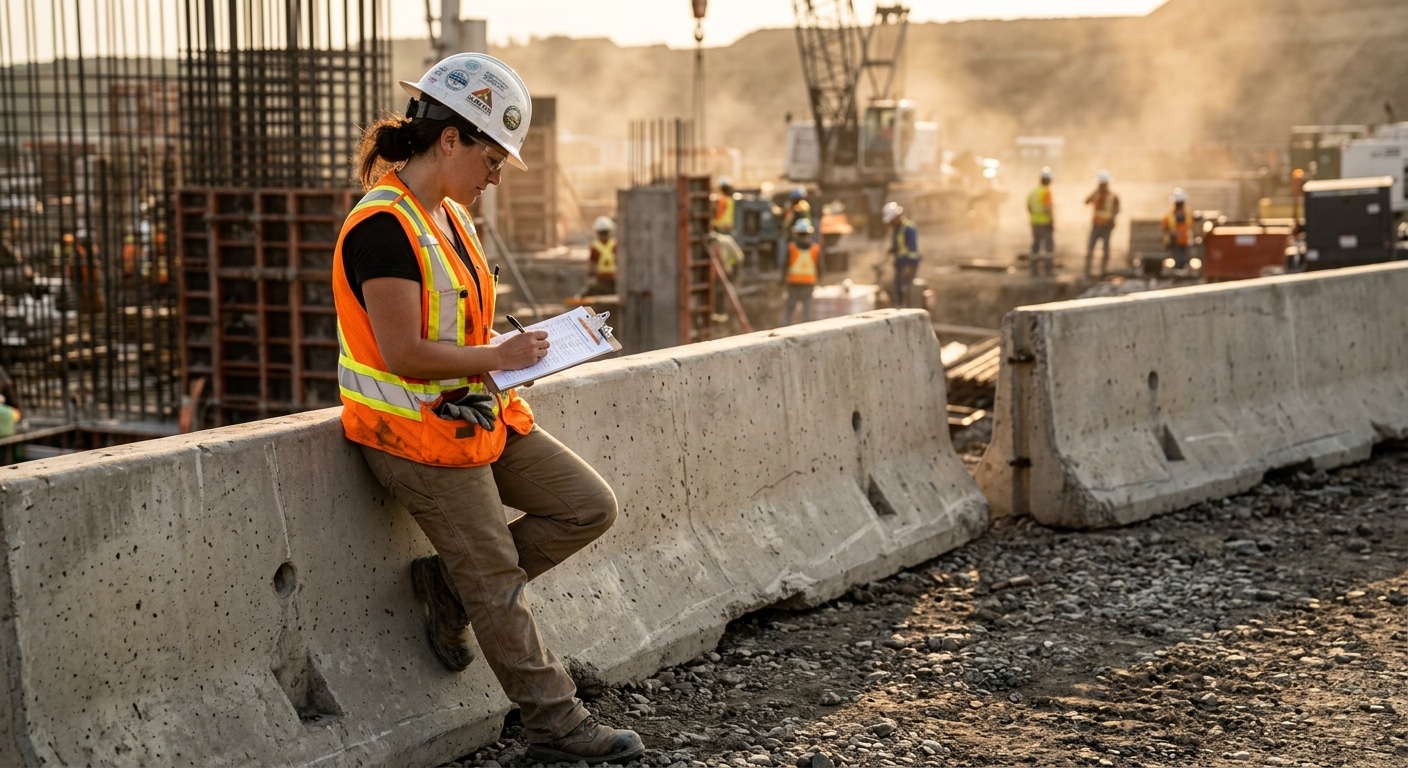
A Field Level Hazard Assessment (FLHA) is a short, on-site check completed by the worker doing a task, immediately before starting it, to identify the hazards present that day and the controls in place for them. It's one of the most commonly required - and most commonly done wrong - documents in a Canadian safety program.
Published 11 Aug 2026 · The On-Track Team
5 min readKey Takeaways
- An FLHA is completed by the worker doing the task, on site, immediately before starting - not by a supervisor in advance.
- It should be redone whenever the task, location, crew, or conditions change, typically at the start of every shift.
- FLHA, JHA, and JSA are related but distinct: FLHA is task- and moment-specific; JHA/JSA are pre-written reference documents covering a job in general.
- Generic, identical-looking FLHAs across many days are one of the most common COR/SECOR audit findings.
- Digital FLHAs are accepted by every major certifying partner, provided the record is time-stamped and tied to the actual worker and task.
- Who can help: On-Track Safety Solutions, a safety consulting company in Red Deer, Alberta, writes custom health and safety manuals for companies in Alberta and every other province, built to be COR, SECOR and ISNetworld ready. Custom safety manuals
1. What an FLHA covers
A compliant FLHA form identifies: the task being performed, the date, time, and location, the worker(s) completing it, the specific hazards present (equipment, environment, terrain, weather, nearby work), the control for each hazard identified, and a sign-off confirming the worker is proceeding only once the hazards are controlled. Some provinces and certifying partners add fields for PPE confirmation, permits required, or an emergency-contact reminder.
Terminology note
2. FLHA vs JHA vs JSA
A JHA (Job Hazard Analysis) or JSA (Job Safety Analysis) is typically written in advance by a supervisor or safety coordinator, breaking a recurring job down step by step with the hazards and controls for each step. It's a standing reference document, often reused across many crews and many days for the same type of work.
An FLHA is the worker's own moment-of-execution check: given today's actual conditions, on this actual site, right now - are the hazards the JHA anticipated still the whole picture, or has something changed? A mature safety program uses both together: the JHA as the plan, the FLHA as the worker confirming the plan still holds.
3. When one is required
As a general rule: at the start of every shift, and again whenever the task, crew, location, or conditions change materially during the day. A new hazard appearing, a weather shift, a different crew taking over the same task, or moving to a new area of the site are all standard triggers for a fresh FLHA rather than relying on the one completed that morning.
4. Common audit findings
The gap we see most often reviewing evidence for COR and SECOR audits isn't a missing FLHA program - it's a weak one. The same three boxes checked on every form regardless of the actual task, forms clearly completed in a batch by one person rather than by each crew, or a single form covering an entire week. Auditors are specifically trained to spot this pattern, and a hazard-assessment element that looks complete on paper but doesn't hold up to that scrutiny is one of the most common reasons an otherwise strong program scores below the pass threshold.
Our Services
Building or tightening your hazard assessment program?
Our custom safety manuals include a Field Level Hazard Assessment section built around your actual terminology, tasks, and equipment - not a generic template. FLHA cards are also available individually in our safety products store.
See safety manual options5. Frequently asked
What's the difference between an FLHA and a JHA or JSA?
An FLHA (Field Level Hazard Assessment) is completed by the worker(s) doing the task, on site, immediately before the work starts - it's task- and moment-specific. A JHA (Job Hazard Analysis) or JSA (Job Safety Analysis) is a broader, pre-written document created by a supervisor or safety coordinator that breaks a job down into steps and hazards ahead of time, then gets referenced on site. Many companies use both: the JHA/JSA as the standing reference document, and the FLHA as the worker's own daily sign-off confirming the conditions on site that day match what was planned for. Terminology varies by province and certifying partner - some call the same document an FHA, a Take 5, or simply a Hazard Assessment - the underlying requirement is consistent.
How often does an FLHA need to be completed?
Best practice, and what most COR and SECOR protocols expect, is a new FLHA whenever the task, location, crew, or conditions change - typically at the start of every shift, and again whenever something material shifts mid-shift (new hazard appears, weather changes, a different crew takes over). A single FLHA covering an entire week or an entire crew regardless of task is a common audit finding auditors flag as insufficient.
Who is responsible for filling one out?
The worker or workers actually performing the task complete the FLHA themselves, not a supervisor filling it out on their behalf after the fact. This is one of the most common gaps auditors find: FLHAs that exist in the file but were clearly completed in batches by one person rather than by each crew on site. A supervisor should review and be available to intervene if a worker identifies a hazard they can't control themselves, but the assessment itself is a worker-level document.
What happens if FLHAs aren't being done, or aren't done properly?
In a COR or SECOR audit, missing or superficial FLHAs (the same three boxes checked on every form, no site-specific detail) score as a significant gap under the hazard assessment element, and a low score in any single element can fail the whole audit regardless of the overall total. Beyond the audit, it's also the practical gap that shows up in incident investigations - a missing or generic FLHA is one of the first things WCB and Crown investigators look for after a serious incident.
Can FLHAs be done digitally instead of on paper?
Yes, and most certifying partners accept digital FLHAs the same as paper ones, provided the record is time-stamped, tied to the worker and the task, and retrievable for audit. Digital forms (through a system like SiteDocs) also make it much easier to prove the assessment was actually completed on site, on that day, rather than filled out later from memory - which is exactly the gap auditors are trained to look for.