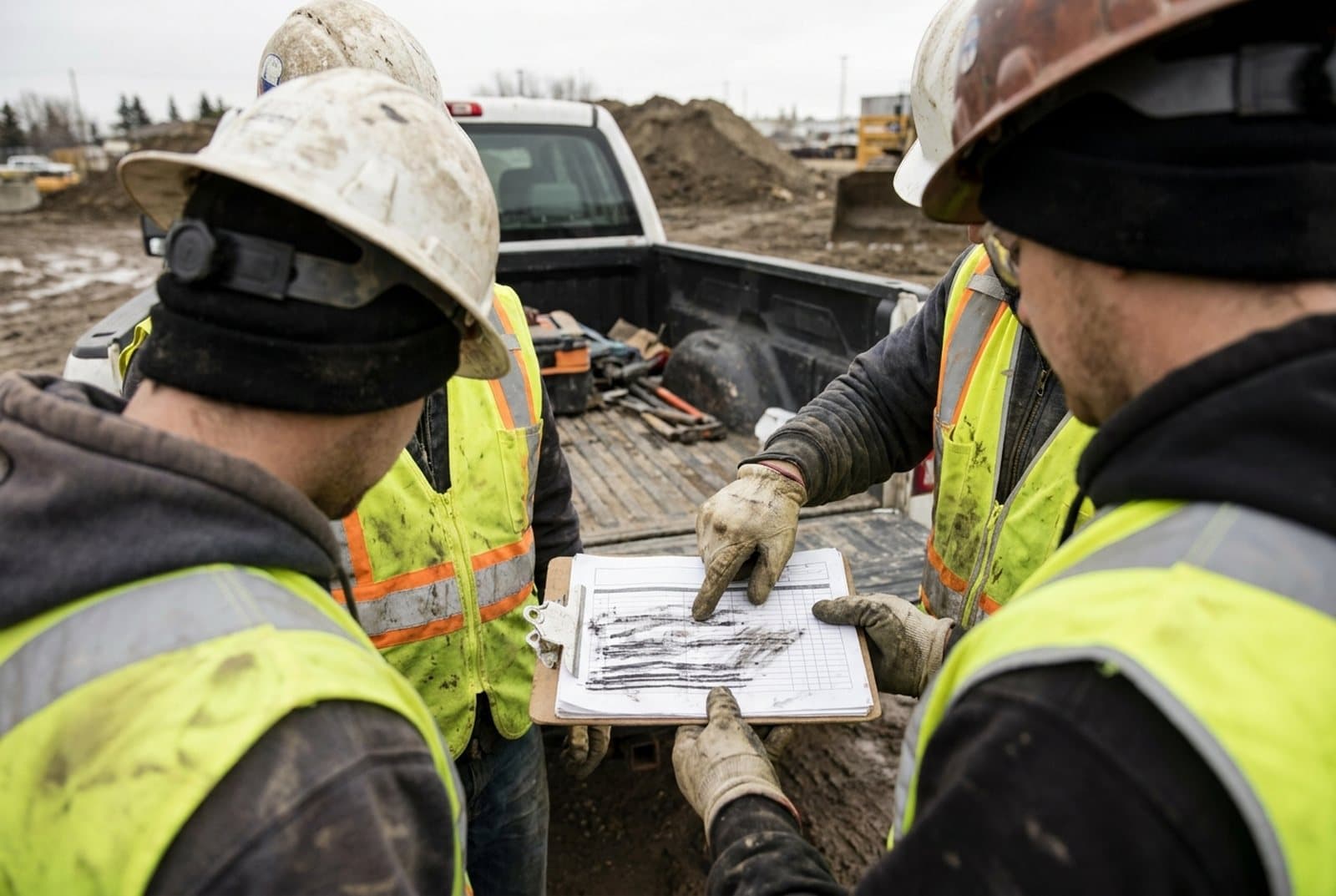
A formal hazard assessment (FHA), a job hazard analysis (JHA) and a job safety analysis (JSA) are largely the same thing: a written, job-based look at the hazards in a task and how you will control them. The name depends on your industry and where you work. Here is how to sort out the terms and train the people who fill in the forms.
Short answer: there is very little difference. A formal hazard assessment (FHA), a job hazard analysis (JHA) and a job safety analysis (JSA) all describe the same basic process. You break a job into steps, list the hazards in each step and write down how you will control them. The name mostly depends on your industry, your client and your country.
In Alberta, the law simply calls it a hazard assessment, and most COR companies call their job-based version an FHA. What matters to a regulator or an auditor is not the title on the form. It is whether the hazards are identified, the controls are real and the people doing the work were involved.
Key facts about FHAs, JHAs and JSAs
- A formal hazard assessment (FHA), a JHA and a JSA are largely the same job-based process under different names.
- Part 2 of the Alberta OHS Code requires the employer to assess the work site and identify existing and potential hazards before work begins.
- The results must be written down, including the methods used to eliminate or control each hazard.
- Workers must be involved in the assessment where reasonably practicable.
- Hazards are eliminated where possible. Otherwise they are controlled with engineering controls, then administrative controls, then personal protective equipment.
- The assessment is repeated at reasonably practicable intervals, when a new work process is introduced, when a process or operation changes, and before significant additions or alterations to a work site.
- A field-level hazard assessment (FLHA) is different. It is the crew's check of today's conditions at the work location, not a job-by-job analysis.
- Alberta does not require any particular form title. The Code allows the assessment in any written format the employer chooses.
Why are there so many names for the same thing?
Because different industries and countries built their own versions of the same idea. The method of breaking a job into steps and naming hazards has been around for decades, and each sector gave it a label that stuck.
US guidance and many manufacturing and utility settings use the name job hazard analysis (JHA). Oil and gas companies often say job safety analysis (JSA), and many Canadian energy clients still ask contractors for JSAs. In Alberta, the OHS Code talks about a hazard assessment, and the COR world settled on formal hazard assessment (FHA) for the job-based version. You will also see task hazard analysis, job safety breakdown and job task analysis.
So a new supervisor who moves from a US-owned plant to an Alberta oilfield service company may be asked for a JHA one week and an FHA the next. The skill is the same. Only the paperwork changes.
What does Alberta law actually require?
Alberta requires a written hazard assessment, not a form with a particular name. Part 2 of the OHS Code sets out what the employer has to do, and the government's explanation guide says the assessment can be in any written format the employer chooses.
Here is what Part 2 asks of the employer, in plain words:
- Assess the work site and identify existing and potential hazards before work begins (section 7).
- Prepare a written report of the results, including how each hazard will be eliminated or controlled (section 7).
- Repeat the assessment at reasonably practicable intervals, when a new work process is introduced, when a work process or operation changes, and before significant additions or alterations to a work site (section 7).
- Involve workers in assessing, controlling and eliminating hazards where reasonably practicable (section 8).
- Eliminate hazards where reasonably practicable. If you cannot, control them with engineering controls, then administrative controls, then personal protective equipment (section 9).
That means a company can call its form a JSA and still meet the Code, as long as the content does the job. It also means a beautifully titled FHA fails if it is a generic list that nobody on the crew has seen. For a full walk-through of what goes in an assessment, see our guide on what a formal hazard assessment is.
Other provinces have their own hazard assessment rules and their own preferred terms. If you work outside Alberta, check the legislation where the work is done.
Train the people who fill in the forms
Job Hazard Analysis (JHA) (CAN) teaches the step-by-step method behind every FHA, JHA and JSA. About 50 minutes online, 80% to pass, with an employer practical checklist.
View the JHA courseHow do the FHA, JHA and JSA compare side by side?
They share the same core steps. The differences are mostly in emphasis, format and who asks for them.
- Formal hazard assessment (FHA): the Alberta and COR term. Job-based or task-based, written, reviewed on a schedule and when work changes. Usually includes a risk rating and a control for every hazard.
- The JHA name (job hazard analysis): a common term in US guidance and many manufacturing, utility and public sector settings. Same step, hazard, control structure. Some versions stress risk rating more than others.
- The JSA name (job safety analysis): a common term with energy clients and many prime contractors. Same structure, often with a safe work procedure written alongside each step.
In every version, you should be able to point to the task, the steps, the hazards in each step, the controls, who was involved and when it was last reviewed. If a client asks you for a JSA and you already have an FHA for that task, you usually have what they need. Check their template and send your FHA content in their format if they insist.
Where risk rating fits
Many formal hazard assessments rate each hazard by how likely it is and how bad the harm could be. That rating tells you which hazards need the strongest controls first. Risk management standards such as ISO 31000 describe the same cycle of identify, analyze, evaluate and treat. You do not need to quote a standard on your form, but the people filling it in should understand why the rating matters.
How is an FLHA different from an FHA?
A field-level hazard assessment (FLHA) is the crew's check of the actual conditions at the work location, done at the start of the shift or when conditions change. An FHA is the planned, job-by-job assessment done ahead of time.
Think of it this way. The FHA says what hazards a task normally carries and how you control them. The FLHA asks what is different today: the weather, the ground, other crews nearby, a missing tool, a new worker. The FLHA is not a mini FHA and should not copy the FHA table. It works best when it is short, specific and filled in by the people doing the work.
Both matter. A strong FHA program with no field checks misses changing conditions. Field checks with no FHA behind them leave the crew guessing about planned controls. Read more in our page on what an FLHA is.
What is the hierarchy of controls?
The hierarchy of controls is the order you choose controls in, from most effective to least. Alberta's OHS Code builds it into section 9, and every FHA, JHA or JSA should follow it.
- Eliminate the hazard. Remove it from the job, for example by doing the work at ground level instead of at height.
- Engineering controls. Change the equipment or the work area, such as guards, ventilation, barriers or guardrails.
- Administrative controls. Change how people work, such as procedures, training, signage, scheduling and supervision.
- Personal protective equipment. The last line of defence, used when other controls cannot reduce the risk enough, or alongside them.
A common weak spot on hazard assessment forms is listing only PPE and training for every hazard. That tells an auditor, and a worker, that nobody really looked for a better control. People who are trained in the method are much more likely to reach higher up the list.
Where does hazard assessment fit in COR?
Hazard assessment is one of the core elements of a Certificate of Recognition (COR) audit in Alberta. Auditors review your assessments, check that controls are in place and interview workers to see whether they took part and know the hazards of their jobs.
Auditors are not grading the name on the form. They want to see that the assessments match the real work, are kept current and involve the crew. For detail on what auditors look for, read formal hazard assessments: what COR auditors expect.
Who should be trained to fill in hazard assessments?
Anyone who builds, reviews or signs off a formal hazard assessment should be trained in the method. That usually means supervisors, foremen, leads and safety coordinators, plus experienced workers who help write the assessments for their own tasks.
Section 8 of the Alberta OHS Code expects workers to be involved where reasonably practicable. Involvement works much better when the workers at the table know how to break a task into steps and think through controls. A short, shared method also keeps assessments consistent across crews and sites.
Choosing the right course
We carry three related online courses. Pick based on what the person does with hazard assessments.
- Job Hazard Analysis (JHA) (CAN): for people who fill in and review job-based hazard assessment forms. About 50 minutes, 80% to pass, Canadian version with an employer practical checklist.
- Hazard Assessment Safety: a broader awareness course on why hazard assessments matter to a safety program. Good for workers and new supervisors.
- Hazard Identification, Assessment, and Control: a general course on spotting, assessing and controlling hazards across the workplace. Good for all workers.
Many companies put all workers through a general hazard course and add the JHA course for anyone who writes or signs assessments. The course name says JHA, but everything it teaches applies directly to your FHA forms in Alberta.
Online training is the knowledge part
Passing an online course shows the person knows the method. It does not prove they can build a good assessment on your site. The employer should still watch them do it: pick a real task, have them write or update the assessment with the crew, and review it together. The JHA course includes a checklist employers can use for this practical evaluation.
How often should hazard assessment training be refreshed?
The Alberta OHS Code does not set a fixed renewal period for this training. The JHA (CAN) certificate is valid for 24 months, and many employers use that as a refresher cycle.
Refresh sooner when work changes, when a new process or new equipment comes in, after an incident where the assessment missed a hazard, or when your own reviews show assessments are copied, vague or out of date. Those are the same moments the Code asks you to revisit the assessment itself.
Get your supervisors trained this week
Job Hazard Analysis (JHA) (CAN) is $49.99, self-paced and about 50 minutes. Certificates download on completion.
Enrol in the JHA courseRelated guides and courses
- Job Hazard Analysis (JHA) (CAN) course
- What is a formal hazard assessment?
- What is an FLHA?
- Formal hazard assessments: what COR auditors expect
- How to create a formal hazard assessment
- Hazard Assessment Safety course
- Hazard Identification, Assessment, and Control course
- Talk to our safety experts
Frequently asked questions
What is the difference between a JHA, a JSA and an FHA?
Very little. A formal hazard assessment (FHA), a job hazard analysis (JHA) and a job safety analysis (JSA) all break a job into steps, list the hazards in each step and record the controls. The name depends mostly on the industry, the client and the country.
What does Alberta call a JHA or JSA?
The Alberta OHS Code calls it a hazard assessment, and most Alberta COR companies call the job-based version a formal hazard assessment (FHA). The Code allows the assessment in any written format the employer chooses.
Can I use a JSA form instead of an FHA form in Alberta?
Yes, if it does what Part 2 of the Alberta OHS Code requires. The hazard assessment must be written, identify existing and potential hazards, set out how each is eliminated or controlled, involve workers where reasonably practicable and be repeated when work changes.
Is an FLHA the same as an FHA?
No. A formal hazard assessment (FHA) is the planned, job-by-job assessment done ahead of time. A field-level hazard assessment (FLHA) is the crew's check of today's conditions at the work location at the start of the shift or when conditions change.
When does a formal hazard assessment need to be redone in Alberta?
Under the Alberta OHS Code, a hazard assessment is repeated at reasonably practicable intervals, when a new work process is introduced, when a work process or operation changes, and before significant additions or alterations to a work site.
What order should hazard controls follow?
Follow the hierarchy of controls in section 9 of the Alberta OHS Code: eliminate the hazard where reasonably practicable, then use engineering controls, then administrative controls, and use personal protective equipment last.
Who needs JHA or hazard assessment training?
Anyone who builds, reviews or signs a formal hazard assessment, such as supervisors, foremen, leads and safety coordinators, plus workers who help write assessments for their own tasks. The online Job Hazard Analysis (JHA) (CAN) course covers the method in about 50 minutes.
Is an online JHA course enough on its own?
An online Job Hazard Analysis (JHA) course covers the knowledge. The employer should still confirm on the job that the person can build and use a hazard assessment for real tasks. The JHA (CAN) course includes an employer checklist for that practical evaluation.