One of the most avoidable reasons a company fails their COR audit is an incomplete Formal Hazard Assessment program. Not missing entirely, but incomplete. Here is what auditors look for and how to close the gaps before your next audit.
One of the most avoidable reasons a company fails their COR audit is an incomplete Formal Hazard Assessment program. Not missing entirely, but incomplete. The positions are listed, there are a handful of assessments on file, and the supervisor can point to a binder. But when the auditor starts asking questions, the gaps appear: tasks that were never formally assessed, controls that were identified but never implemented, a program that has not been touched since the company first applied for COR three years ago.
That scenario plays out more often than most safety professionals expect. And it is almost always fixable before the audit, if the team knows what to look for.
What Is a Formal Hazard Assessment?
A Formal Hazard Assessment (FHA) is a systematic, documented evaluation of the hazards associated with a specific job, task, or work process. The purpose is to identify what could go wrong, assess the severity and likelihood of harm, and document the controls that will reduce or eliminate the risk.
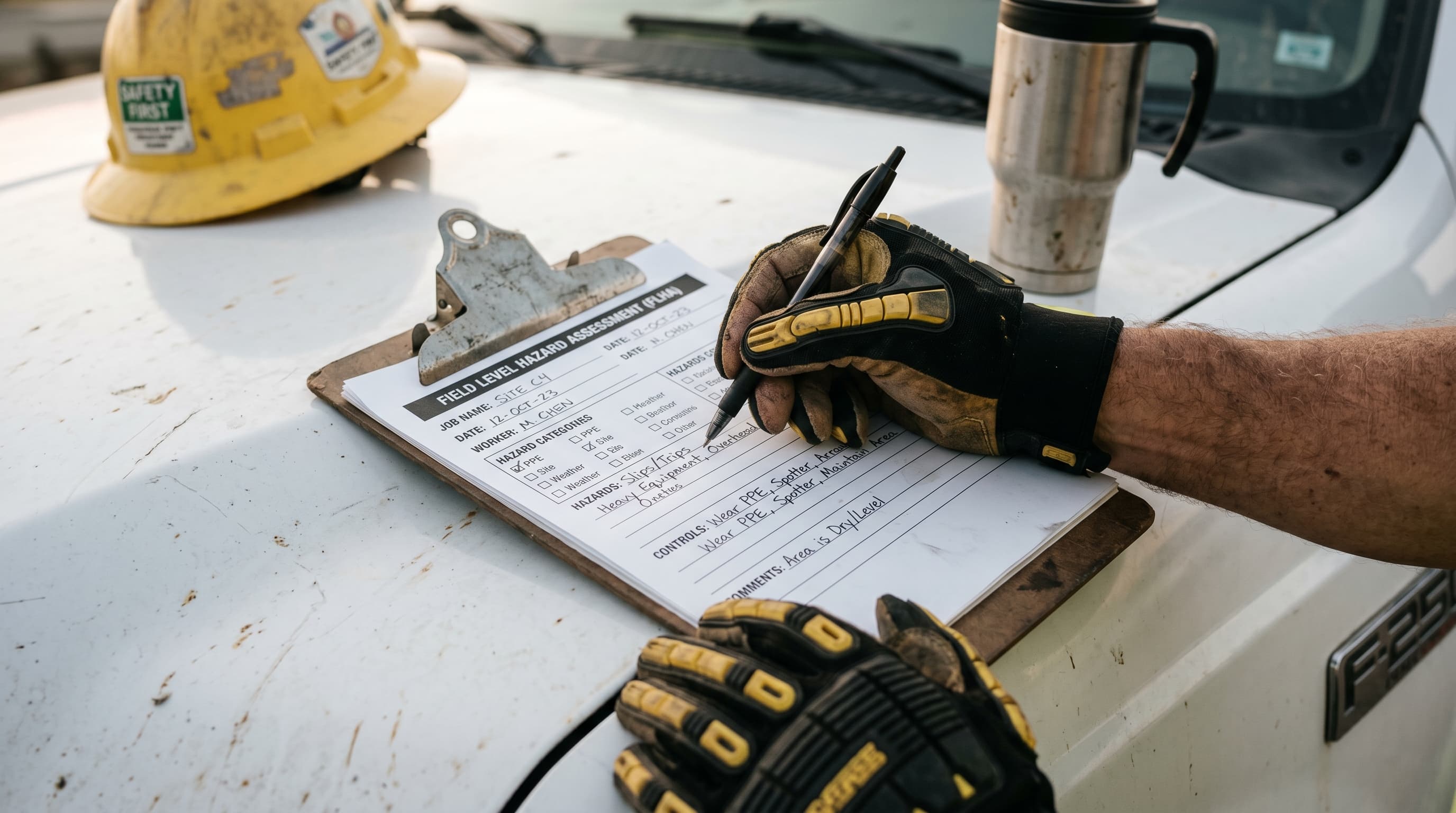
It is a planned, deliberate process conducted by a qualified person, typically in advance of the work being performed. That is the key distinction between an FHA and a Field Level Hazard Assessment (FLHA).
An FLHA is a worker-level pre-task check done in the field, often daily, before a specific task begins. It is valuable and required, but it is reactive and immediate. An FHA is proactive and systematic. It looks at the work in its entirety, considers every relevant hazard category, and produces a document that becomes part of the company's safety program.
Both are required. They serve different purposes. COR auditors assess them separately. Treating the daily FLHA as a substitute for the formal program is one of the most common FHA errors On-Track sees in the field.
What COR Auditors Look for in Element 5
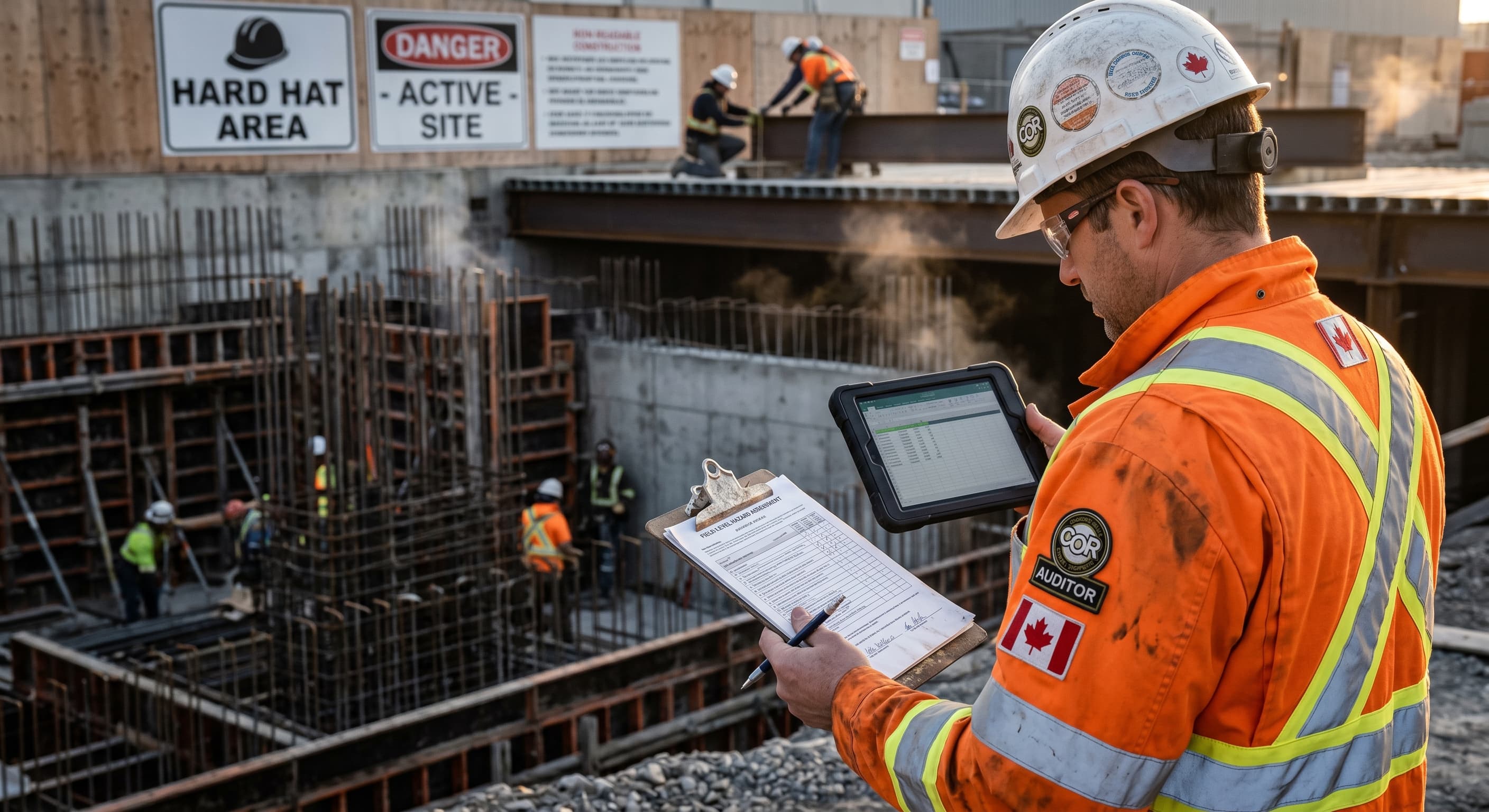
Under both ACSA and ESC COR frameworks, hazard assessment sits in Element 5. The auditor is not simply checking that FHA documents exist. They are verifying that the program functions as intended across your workforce and work scope.
Positions and tasks are identified
Every position in the company should have the relevant tasks captured, and every significant task should have a corresponding FHA. Auditors cross-reference your Job Task Inventory against your FHA library. If there are tasks in your inventory with no FHA, that is a documented gap.
Hazards are assessed
The FHA must identify actual hazards for the specific task, not generic placeholder language. Applying a blanket note about slips and trips to every task in the program does not demonstrate that the work was genuinely assessed.
Controls are documented and adequate
Hazard identification without control documentation does not satisfy the standard. Controls must follow the hierarchy of controls where applicable and be realistic for the work being performed.
The program is reviewed and kept current
This is where many companies fall short. An FHA completed at program launch and never revisited does not reflect current conditions, current legislation, or lessons learned from incidents or near misses.
The Four Most Common FHA Gaps On-Track Sees
After conducting COR and SECOR audits across Alberta and Western Canada for over 17 years, the gaps we see most consistently come down to four things.
1. Incomplete task coverage
The company has FHAs for their highest-risk tasks but has not worked through the full Job Task Inventory. Low-frequency tasks, administrative work with exposure elements, or tasks added when the company took on new work are often missing.
2. Generic hazard language
FHAs that list hazardous materials, working at heights, or heavy equipment without specifics do not demonstrate that a genuine assessment was conducted. Auditors are looking for the task-specific hazard: the particular chemical used, the height involved, the equipment the worker is operating.
3. Controls that exist on paper but not in practice
An FHA that lists a control that the company does not actually use, cannot point to training records for, or has no enforcement mechanism for, is a liability. Auditors verify that controls are implemented, not just documented.
4. No review process
The FHA was done once and filed. There is no record of annual review, no documented trigger for updates, and often no one assigned to own the process. The program is technically in place, but it is not a living part of how the company manages safety.
How to Build a Solid FHA Program

A well-functioning FHA program is not complicated, but it does require structure.
Start with your Job Task Inventory
Before you can assess hazards, you need a complete list of the work your people do. Organise this by position, then by task within each position. This becomes the backbone of your FHA program.
Assign a qualified person to lead each assessment
FHAs should involve the people who do the work, but they need to be led by someone with hazard identification training. The worker brings the operational knowledge; the qualified person brings the assessment framework.
Use a consistent format
Your FHA document should capture the task, the steps within the task, the hazards at each step, the risk rating, the controls, the residual risk after controls, and the responsible party for each control.
Work through the full inventory
Prioritise by risk: highest-hazard tasks first, lower-risk tasks through to completion. Set a timeline and track progress. Do not let the high-priority work crowd out the rest of the inventory indefinitely.
Link controls to training and procedures
For each control identified, document whether training is required, whether a Safe Work Practice or Standard Operating Procedure exists, and how compliance is verified. Controls that exist in isolation are difficult to audit and difficult to enforce.
When to Review and Update Your FHAs
Annual review is the minimum standard under COR. Every FHA in your program should be reviewed at least once per year, and the review should be documented.
Beyond the annual cycle, there are specific triggers that should prompt an immediate review:
- New or modified tasks: If the scope of work changes, a new piece of equipment is introduced, or a task is performed in a new environment or for a new client, the FHA must be updated before the work begins.
- After an incident or near miss: Any time something goes wrong or nearly goes wrong, the relevant FHA should be reviewed to determine whether the hazard was identified and whether the controls were adequate.
- After a regulatory change: When the OHS Code or applicable regulations are amended in ways that affect how the work is performed or controlled, your FHAs need to reflect the updated requirements.
- When worker feedback identifies a gap: Workers doing the tasks are often the first to notice that a hazard was missed or that a control is not working as intended. A process for capturing that feedback strengthens your program and demonstrates worker participation, which auditors also assess.
Build the Right Foundation
If your FHA program has gaps, addressing them before your next audit is one of the highest-return investments you can make in your safety program. A complete, current hazard assessment library is not just an audit requirement. It is the foundation that makes every other element of your safety program work properly.
Need help building your FHA program from scratch?
On-Track Safety Solutions builds custom safety manuals and hazard assessment programs for companies across Alberta and Western Canada. Our team works through your full Job Task Inventory with you, develops FHAs for every position and task, and delivers a complete, audit-ready program in a format your team can maintain going forward.
Get a quoteConnect Your FHAs to Your Site Orientation
For companies preparing for COR certification, a well-built FHA program connects directly to your site orientation. When workers arrive on site, their orientation should reference the FHAs for the tasks they will be performing, confirm that hazard awareness is part of their onboarding, and document that they have received the information. A custom orientation package that integrates with your hazard assessment program ensures that the work you have done on paper translates into consistent, verifiable worker awareness in the field.
Ask us about a custom orientation package
On-Track builds custom site orientation packages that reference your FHA program directly, so every worker arriving on site understands the hazards and controls that apply to their role.
Contact us