Train-the-trainer courses build the skill to teach, not just the underlying safety knowledge. Here is what the courses actually cover, which topics belong in-house, which must stay with a certified third party, and the real cost and consistency tradeoffs of each.
Every employer eventually asks the same question after a few years of paying for outside instructors: could we teach this ourselves? The honest answer is yes for some topics and no for others, and the line between them is not always where people expect it to be. Train-the-trainer courses exist to build that internal capacity properly, but the course itself is only step one.
This post covers what a train-the-trainer course actually teaches, which safety topics are genuinely good candidates for in-house delivery, which ones need to stay with a certified third party, and what it really costs (in effort, not just dollars) to run training internally instead of outsourcing every session.
What a Train-the-Trainer Course Actually Covers
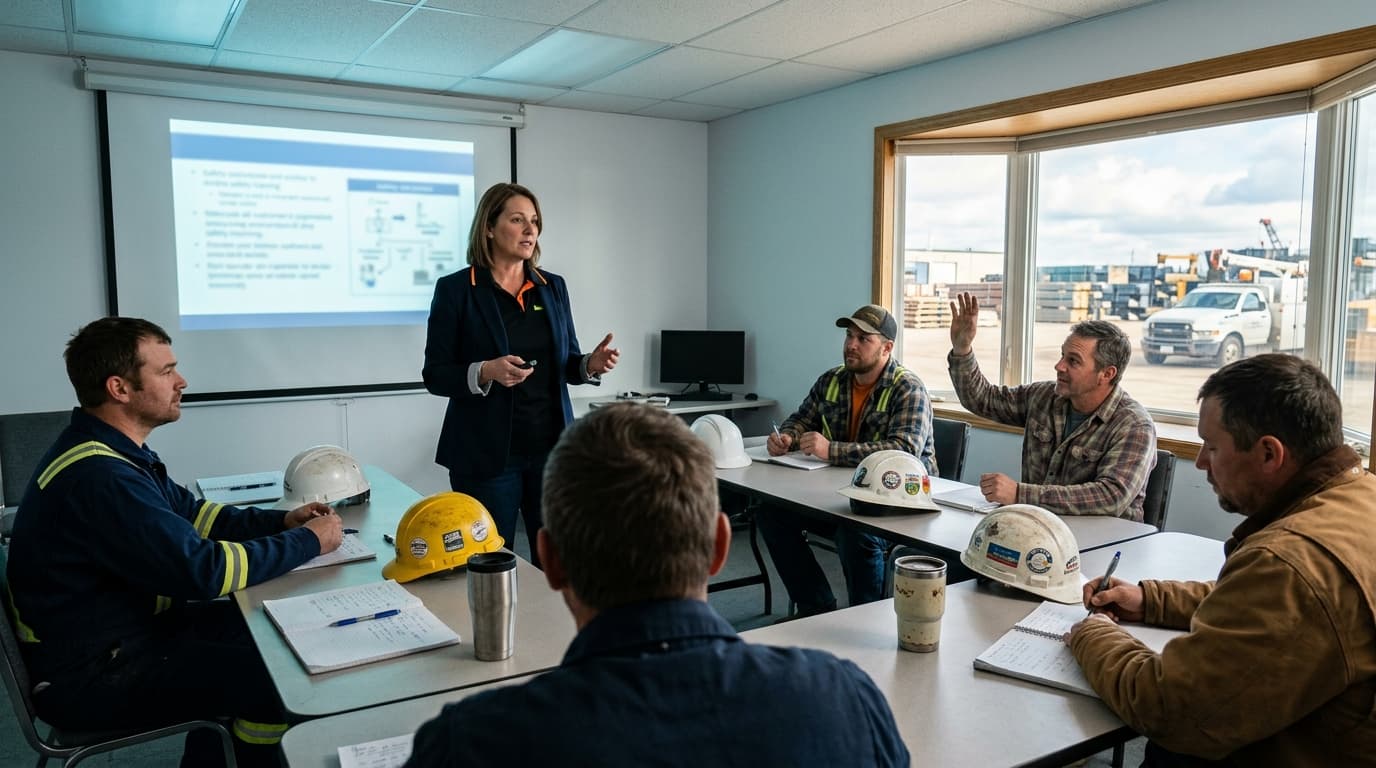
A train-the-trainer course is not the underlying safety course taught at double speed. It is a separate skill set layered on top of subject knowledge. A competent trainer already knows the hazard, the standard, and the correct procedure; the course teaches them how to transfer that knowledge to adult learners with different reading levels, first languages, and shop-floor experience, and how to prove they did it.
Typical content includes adult learning principles (why lecturing alone fails and demonstration plus practice works), how to structure a session with clear objectives, how to run and score a practical evaluation rather than just a written quiz, how to handle a worker who is not getting it without embarrassing them in front of the crew, and how to document attendance, competency sign-off, and refresher intervals so the paperwork holds up under a COR or SECOR audit. Some programs also cover recordkeeping formats that satisfy the specific certifying body, since ACSA, Energy Safety Canada, and AASP each have their own expectations for what a training record needs to show.
Good Candidates for In-House Delivery
Topics that are not tied to a single external certifying body, that change based on your specific site or equipment, or that need to be delivered frequently to new hires are usually the best fit for an internal trainer.
- WHMIS 2015 awareness and site-specific chemical inventory training
- New worker orientation and site-specific hazard walkthroughs
- Job hazard assessments and how to complete them correctly
- PPE selection, inspection, and care for the equipment your crews actually use
- Housekeeping and good practice standards specific to your operation
- Ladder safety, manual materials handling, and other core awareness topics
- Refresher sessions for competencies your workers were already certified in elsewhere
These topics share a common trait: the content is either generic enough that any qualified adult can teach it, or specific enough to your operation that an outside instructor would need a site tour before they could teach it properly anyway. Bringing them in-house also means new hires are not waiting weeks for the next scheduled public course before they can start work.
What Has to Stay Third-Party Certified
Other topics are gated by the certifying body itself, not by whether your internal trainer understands the material. If the certificate has to carry a specific issuer's name and logo for a client, prequalification platform, or regulator to accept it, you cannot replicate that internally no matter how skilled your trainer is.
- H2S Alive, a branded Energy Safety Canada program that only ESC-authorized instructors can deliver and certify
- First Aid and CPR, which require an approved training agency under provincial occupational health and safety rules
- Confined space entry and rescue, where the practical evaluation typically requires equipment and a qualified assessor beyond a standard toolbox talk
- Fall protection certification tied to specific harness, anchor, and rescue equipment, versus general fall hazard awareness which can often be done in-house
- Powered mobile equipment operator certification where the client or site owner specifies a named third-party provider as a condition of site access
Do not assume a topic is safe to bring in-house just because your trainer holds a personal certificate in it. Check whether your clients, ISNetworld or Avetta prequalification requirements, or your COR certifying partner (ACSA, Energy Safety Canada, or AASP in Alberta) specify a named issuing body. If they do, in-house delivery will not satisfy the requirement even if the training itself is technically sound.
The Real Cost and Consistency Tradeoffs
Outsourcing every course has an obvious cost: per-seat fees add up fast for a crew that turns over regularly, and scheduling around a public course calendar slows down onboarding. Building in-house capacity trades that for a different set of costs that are easy to underestimate.
Your trainer needs their own train-the-trainer certification maintained and refreshed, which is time off the tools. You need a second qualified trainer as backup, because a program built around one person collapses the day they are on vacation or leave a company. You need consistent materials and evaluation criteria so that training delivered by two different internal trainers, or in two different years, produces the same standard of competency, not a drifting version of the original course. And you carry the documentation burden yourself: attendance records, evaluation results, and trainer qualification files all need to be maintained in a format that survives scrutiny at your next COR or SECOR audit, since a certifying partner will ask who trained your trainer and how you know the sessions were delivered consistently.
A digital form platform like SiteDocs helps here, since it timestamps attendance and evaluation records automatically instead of relying on paper sign-in sheets that go missing between audit cycles.
Building a Blended Model
Most operations that do this well end up with a blended approach rather than an all-or-nothing decision. High-frequency, low-liability topics like WHMIS, orientation, and hazard assessment move in-house once volume justifies the trainer investment. Low-frequency, high-liability, or client-mandated topics like H2S Alive, first aid, and confined space stay with certified third-party providers regardless of volume, because the certificate itself is the product, not just the knowledge transfer.
Before committing to a train-the-trainer program, map out which of your recurring training needs actually fall on the in-house side of that line, and confirm with your certifying partner or major clients that the topics you plan to bring internal will still be accepted. That single conversation up front prevents a lot of rework later, particularly if your training records feed into a COR or SECOR audit or a contractor prequalification file.