
Safety Forms
Hazard Assessment for Office
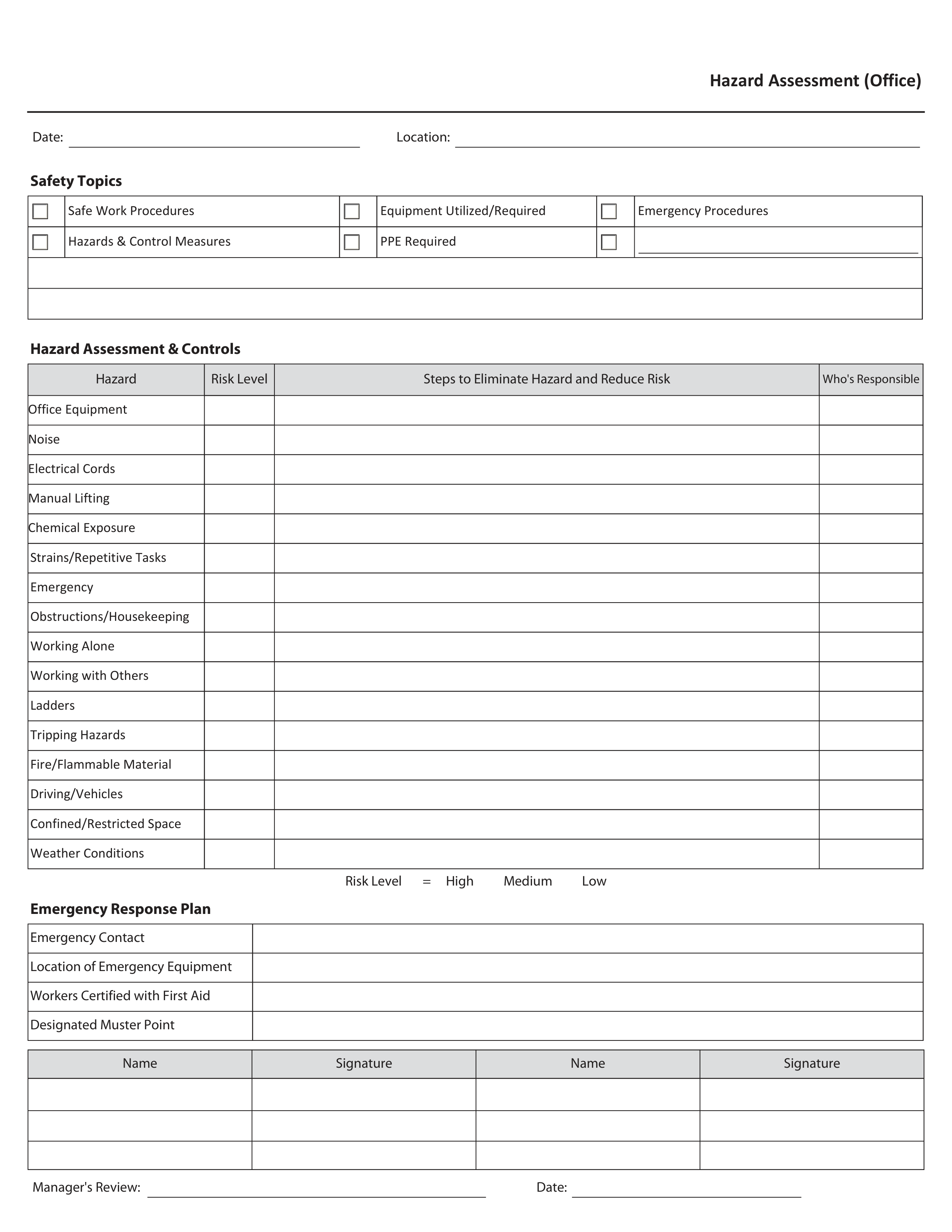
A Hazard Assessment built specifically for office environments - 16 pre-listed hazards from office equipment and electrical cords to working alone and driving, each with a Risk Level, control steps, and a named person responsible - delivered as a real fillable PDF, not a generic worksite form that doesn't fit a desk-based team.
- Fillable PDF — type into it on any device, or print it blank
- Single page, 8.5" x 11" (Letter)
- Add your company logo at checkout — no extra charge
- Written by Canadian safety professionals to provincial OHS standards
- Instant download after purchase
Written by certified COR auditors · Trusted by Canadian contractors for 17+ years · Secure Stripe checkout · Instant delivery + re-download any time from your purchases page
Pairs with online training
Certificates issue instantly through our online training portal.
16 OFFICE-SPECIFIC HAZARDS, EACH RATED AND ASSIGNED, NOT A CONSTRUCTION-SITE FORM STRETCHED THIN
What you get
- A fillable PDF - check boxes and type directly into every field
- A Safety Topics checklist covering Safe Work Procedures, Equipment, Emergency Procedures, Hazards & Control Measures, and PPE, plus 3 blank lines for site-specific topics
- 16 pre-listed office hazards - Office Equipment, Noise, Electrical Cords, Manual Lifting, Chemical Exposure, Strains/Repetitive Tasks, Emergency, Obstructions/Housekeeping, Working Alone, Working with Others, Ladders, Tripping Hazards, Fire/Flammable Material, Driving/Vehicles, Confined/Restricted Space, and Weather Conditions - each with Risk Level, Steps to Eliminate Hazard and Reduce Risk, and Who's Responsible
- An Emergency Response Plan section (Emergency Contact, Location of Emergency Equipment, Workers Certified with First Aid, Designated Muster Point)
- A Name/Signature acknowledgement table and Manager's Review sign-off
- Your company logo added to the form, at no extra charge
How to fill it out and keep it. Open it in Adobe Acrobat Reader (free) or a desktop browser like Chrome or Edge, then use that program's own Save or Download button, not just closing the tab, so your entries are kept in the saved copy. On a phone, most PDF apps will let you view the form but not type into it - fill it out on a computer, or print it and use a pen.
Specifications
- Size
- 8.5" x 11" (Letter)
- Format
- Fillable PDF - type into it on any device, or print it blank
- Company logo
- Included - upload at checkout, or we print your company name instead
- Delivery
- Instant download after purchase
Why crews use it
- 16 hazards written for office work specifically - Manual Lifting, Working Alone, and Repetitive Tasks sit alongside Electrical Cords and Obstructions, none of it construction- or field-focused content that doesn't apply to a desk-based team
- A Risk Level column on every hazard means low-probability items (like Weather Conditions for an office) don't get the same control effort as high-risk ones (like Driving), keeping the assessment proportionate
- Naming a specific 'Who's Responsible' person per hazard turns a generic list into an accountable action plan, not just a checklist nobody owns
- The built-in Emergency Response Plan section keeps evacuation and first-aid readiness on the same document as the hazard assessment itself, not a separate binder nobody can find
Built for
- Office managers and administrators completing a required annual or periodic hazard assessment
- Small businesses and professional offices that don't have field or construction hazards but still need a documented HA for COR/SECOR or general OHS compliance
- Safety coordinators managing hazard assessments across mixed office and field teams who need an office-specific version, not a one-size-fits-all form
Why it matters
Most hazard assessment templates are written for construction or industrial sites and force an office team to either skip irrelevant sections or leave real office hazards - repetitive strain, working alone after hours, tripping on cords - unaddressed. A hazard assessment built for the office environment it actually describes is the difference between a document that gets filed and one that reflects the real workplace.
Try it right here
Click a box. Type a line. See how it feels before you buy.
This is the real form layout - what you type here isn't saved or sent anywhere, it's just so you can see the fields work before you pay.
Common questions
Before you buy
What people ask us about the Hazard Assessment for Office.
What is the Hazard Assessment for Office used for?
A Hazard Assessment built specifically for office environments - 16 pre-listed hazards from office equipment and electrical cords to working alone and driving, each with a Risk Level, control steps, and a named person responsible - delivered as a real fillable PDF, not a generic worksite form that doesn't fit a desk-based team. Who uses it: Office managers and administrators completing a required annual or periodic hazard assessment; Small businesses and professional offices that don't have field or construction hazards but still need a documented HA for COR/SECOR or general OHS compliance; Safety coordinators managing hazard assessments across mixed office and field teams who need an office-specific version, not a one-size-fits-all form.
Can we fill it in on a computer, or is it print-only?
Both. It is a fillable PDF, so every field can be typed into on a laptop or tablet and saved, or you can print it blank and fill it in by hand. Your company logo is added at no extra charge.
Does using this form make us compliant?
No single form makes a company compliant. A form is the evidence half of a safety program - it records that something was checked and by whom. It carries weight at audit time when the written program behind it says the check is required and how often. If that program does not exist yet, that is the part we write.
When do I get it?
Immediately after checkout as a download, and you can re-download it any time from your purchases page. Print or fill in as many copies as your own crews need.
From the team that wrote it
These forms come from a bigger program.
Inspection and competency forms are the evidence half of a safety program. If the program they belong to does not exist yet, or has not been updated in a few years, that is the part we write.