Insights
WHMIS 2026: What Actually Changed
Canada's three-year WHMIS/GHS transition quietly ended on December 14, 2025. It changed what suppliers put on labels and safety data sheets - it did not, on its own, require every WHMIS-trained worker to be retrained. Here is what actually moved, and what to check instead of guessing.
Published 5 Sep 2026 · The On-Track Team · Reviewed by our ACSA and Energy Safety Canada certified auditors
7 min readKey Takeaways
- The transition (SOR/2023-272) aligned Canada with GHS Revision 7, plus select Revision 8 elements - not Revision 9.
- The 3-year transition window ended December 14, 2025. Health Canada is doing compliance promotion, not enforcement, until July 19, 2027.
- Changes are supplier and manufacturer-side: new hazard classes, a renamed Aerosols class, and expanded safety data sheet content - not a new employer training mandate.
- No jurisdiction in Canada requires retraining tied to this transition. What's required is that workplace training and your label/SDS binder reflect the current versions as suppliers roll them out.
- Alberta's WHMIS training requirement lives at OHS Code Part 29, Section 397.
- Who can help: On-Track Safety Solutions, a safety consulting company in Red Deer, Alberta, sells 383 online safety courses with certificate tracking, plus a free corporate training account that gives a whole crew 20% off every course for three months. Corporate training accounts
1. What the transition actually was
Health Canada amended the Hazardous Products Regulations under SOR/2023-272, published in the Canada Gazette on January 4, 2023 and in force December 15, 2022, to align Canada's system with the 7th revised edition of the Globally Harmonized System (GHS), plus select elements of the 8th revised edition. That started a three-year transition period for suppliers and manufacturers to bring classification, labels, and safety data sheets into compliance. That window closed on December 14, 2025.
Enforcement is not immediate
2. What changed on labels and SDSs
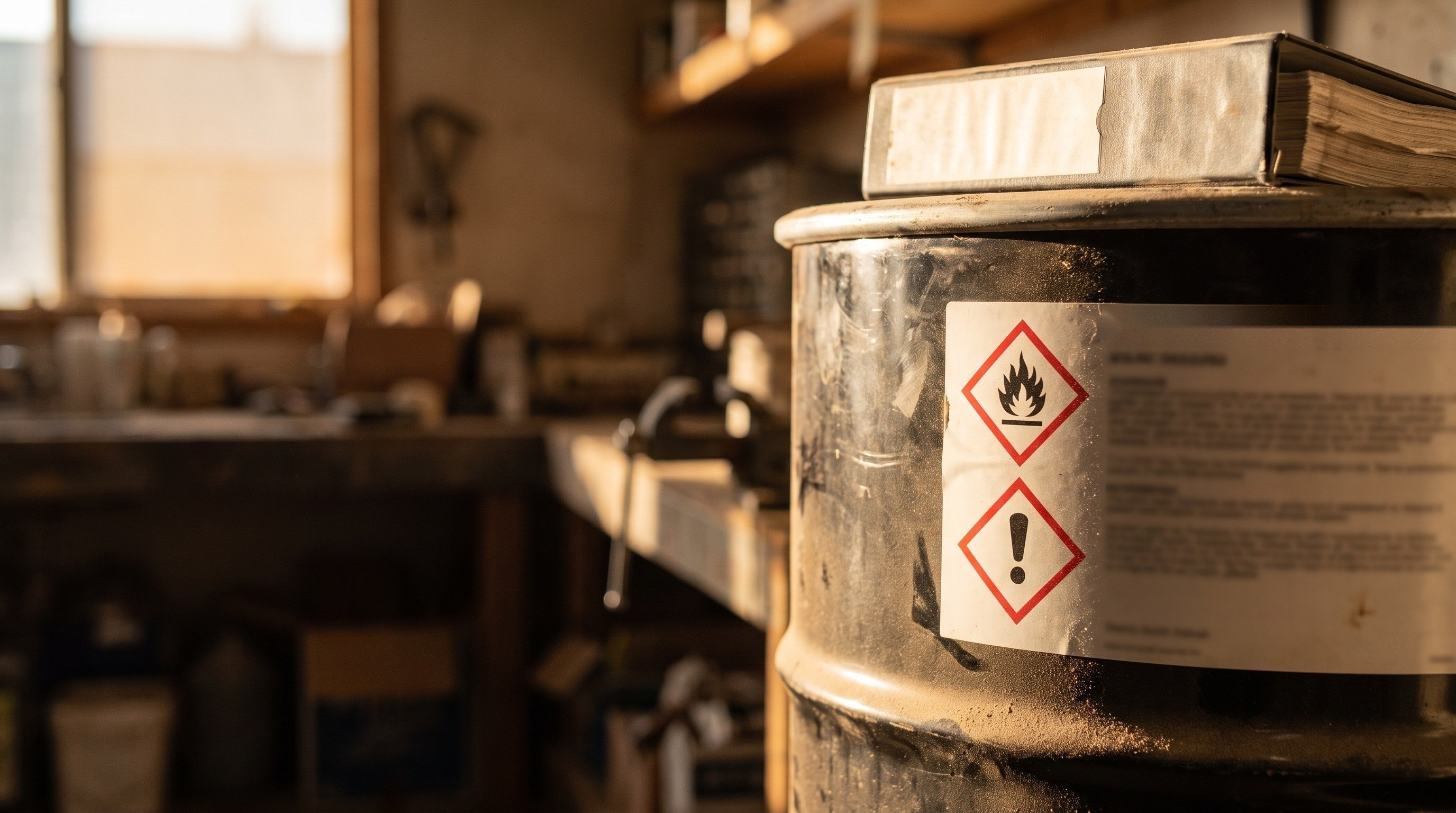
These are supplier and manufacturer-side changes to classification and documentation, not a new category of pictogram workers need to learn from scratch:
- A new physical hazard class, “Chemicals Under Pressure”
- “Flammable Aerosols” renamed to “Aerosols,” with a new non-flammable Category 3
- Flammable Gases split into Categories 1A and 1B
- “Pyrophoric Gases” repealed as a standalone class and folded into Flammable Gases
- Expanded required information on safety data sheets, including combustible dust hazard statements
- Revised rules for how suppliers may withhold exact ingredient concentration ranges as a trade secret
3. Do workers need retraining?
Not automatically, and this is the point most likely to get overstated. No jurisdiction in Canada - federal or provincial - specifies a mandatory retraining event tied to this transition. WHMIS programs are already expected to be reviewed and kept effective on an ongoing basis; most jurisdictions, Alberta included, do not set a fixed retraining interval at all. The honest read: your existing WHMIS-trained workers are not suddenly out of compliance on December 15, 2025. What matters is whether the labels and safety data sheets they actually see on the job reflect the current, compliant versions as your suppliers phase them in - and whether your workplace-specific training keeps pace with that.
4. What to actually check
Three things are worth doing now, none of which is a full re-certification program: pull a sample of your current SDS binder and confirm the newest versions from your major suppliers reflect the updated classification; confirm your workplace WHMIS training references the current hazard classes rather than the pre-2023 set; and set a reminder to check again before July 2027, when Health Canada moves from promotion to enforcement.
Our Services
Keeping the SDS binder and program current shouldn't be a manual chase
The Compliance Members Portal tracks document currency and review dates across your whole safety program - WHMIS included - so a supplier update doesn't sit unnoticed for a year.
See the Compliance PortalOnline Training
WHMIS 2025 - the current, amended version, done in an hour
Updated for the December 2025 Hazardous Products Regulations amendments: classification, labels, pictograms, and safety data sheets. Certificate issued on completion.
Take the WHMIS 2025 course5. Frequently asked
Do my WHMIS-trained workers need to be retrained because of this change?
No jurisdiction in Canada - federal or Alberta - mandates retraining tied to this transition. This is a supplier and manufacturer-side classification update, not an employer training trigger. What you do need to do is make sure your workplace-specific WHMIS training and your label/SDS binder reflect the labels and safety data sheets your workers actually encounter as suppliers roll out the updated versions - a review and refresh, not a mandatory recertification of everyone on staff.
What is the actual deadline, and has it already passed?
The transition period ran three years from when the amended Hazardous Products Regulations came into force, ending December 14, 2025. As of today, the transition is over - all hazardous products supplied in Canada must carry compliant classification, labels, and safety data sheets. Health Canada is running compliance promotion, not enforcement, until July 19, 2027, aligned with a similar U.S. OSHA deadline, before shifting to risk-based enforcement.
What GHS revision is Canada actually using?
The amended Hazardous Products Regulations (SOR/2023-272) align Canada with the 7th revised edition of the Globally Harmonized System, plus select elements of the 8th revised edition. Canada has not adopted GHS Revision 9.
What specifically changed on labels and safety data sheets?
New physical hazard class for Chemicals Under Pressure; "Flammable Aerosols" renamed to "Aerosols" with a new non-flammable Category 3; Flammable Gases split into Categories 1A and 1B; Pyrophoric Gases repealed as a standalone class and folded into Flammable Gases; expanded required information on safety data sheets, including combustible dust hazard statements; and revised rules on how suppliers can withhold exact concentration ranges as a trade secret.
Where is WHMIS training actually required in Alberta's OHS Code?
Part 29 of the OHS Code (Alberta Regulation 191/2021) - definitions at Section 394.1, application at Section 395, the training requirement itself at Section 397, and label requirements at Section 398. The federal side sits in the Hazardous Products Act and the Hazardous Products Regulations.