Insights
What Goes in a Mining and Resource Safety Manual
Surface mining, oil sands extraction, and aggregate operations carry a dedicated part of Alberta's OHS Code - and, unlike most other industries, no single dedicated COR certifying partner to build the manual around.
Published 6 Sep 2026 · The On-Track Team · Reviewed by our ACSA and Energy Safety Canada certified auditors
5 min readKey Takeaways
- Alberta's OHS Code has a dedicated mining part - Part 36 - covering ground control, pit-wall stability, and haul truck traffic at mine sites specifically.
- Autonomous haul trucks, used in oil sands surface mining, require a separate, specific OHS approval before deployment.
- Blasting runs under Part 33 and requires a blaster's certificate - but that Part isn't mining-exclusive, it also covers quarrying, construction, and oil and gas.
- There is no mining-specific COR certifying partner in Alberta - most operations certify through a general, all-industries partner like AASP.
- AMSA (Alberta Mine Safety Association) certifies mine rescue training, not COR or SECOR - a distinction worth getting right in a manual.
- Who can help: On-Track Safety Solutions, a safety consulting company in Red Deer, Alberta, writes custom health and safety manuals for companies in Alberta and every other province, built to be COR, SECOR and ISNetworld ready. Custom safety manuals
1. OHS Code Part 36
Alberta's OHS Code (AR 191/2021) contains Part 36, Mining - a dedicated part that applies specifically at mine sites, layered on top of the Code's general parts covering hazard assessment, chemical exposure, and everything else that applies province-wide. This is separate from the Mines and Minerals Act, which governs mineral rights and development approval through Alberta Energy and Minerals and the AER and has nothing to do with worker safety - a manual should never conflate the two.
2. Ground control and haul truck traffic
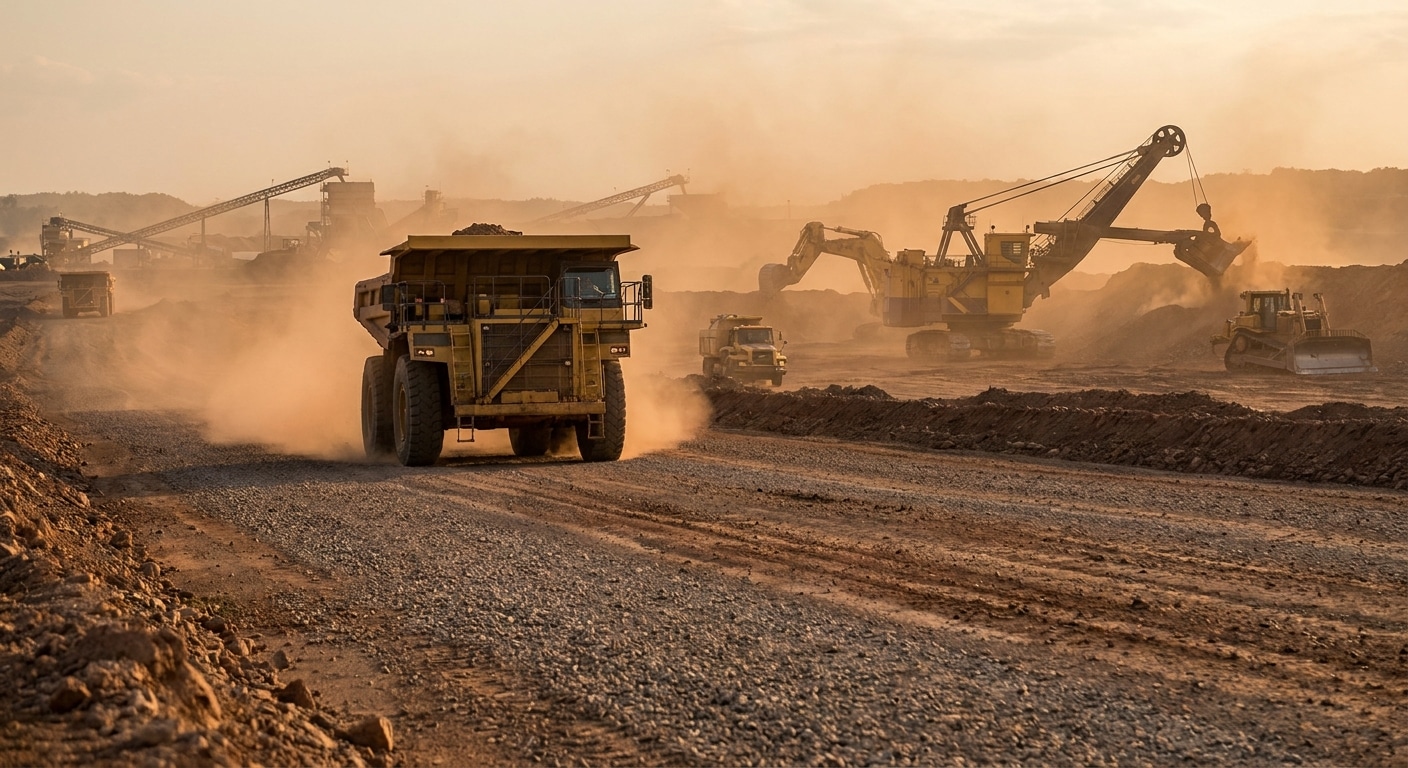
Part 36 requires mine-wall stability specifications and procedures to be certified by a professional engineer, and pit-wall procedures to be verified by a competent person. Unconsolidated material within 2 metres of a working face's crest must be removed entirely; beyond that distance it has to be stabilized. Rubber-tired, self-propelled equipment over 32,000 kg gross vehicle weight - the haul trucks that move material at surface mines - falls under its own set of Part 36 provisions. Autonomous haulage systems, increasingly used in oil sands surface mining, carry a further requirement on top of that: a specific OHS Autonomous Haulage System approval has to be in place before deployment, distinct from the competency duty that applies to a conventionally operated truck.
3. Blasting and dust exposure
Blasting runs under Part 33 (Explosives) and requires a blaster's certificate, valid for up to five years - but this Part isn't mining-exclusive, it applies the same way to quarrying, construction, and oil and gas work wherever explosives are used. Dust exposure, including respirable crystalline silica, is governed by the Code's general chemical exposure limits (Schedule 1) rather than a mining-specific section - the 8-hour exposure limit for respirable crystalline silica is 0.025 mg/m³, the same limit that applies to any industry generating that dust.
Our Services
Building a manual for a surface mining or aggregate operation
A custom safety manual built around Part 36, your actual equipment, and the certifying partner you're audited against - not a generic template that skips the mining-specific pieces.
See custom safety manual options4. Certifying partner and mine rescue
Unlike construction, oil and gas, trucking, or manufacturing, mining doesn't have its own dedicated COR certifying partner in Alberta - most operations certify through a general, all-industries partner such as the Alberta Association of Safety Partnerships (AASP) instead. Mine rescue is a separate track entirely: Alberta mine sites are required to maintain an on-site Emergency Response Team trained to a Director-approved standard, and the Alberta Mine Safety Association (AMSA) is the government-recognized body for that training - not for COR or SECOR certification, which is a distinction worth getting right in a manual rather than treating AMSA as a certifying partner it isn't.
Two separate tracks, easy to conflate
5. Frequently asked
Is there a separate mining law in Alberta, or does the general OHS Code apply?
Both, in a specific way. Alberta's OHS Code (AR 191/2021) contains Part 36, Mining - a dedicated part that applies specifically at mine sites, on top of the Code's general parts (hazard assessment, chemical hazards, and so on). The Mines and Minerals Act is a separate, unrelated statute governing mineral rights and development approval, administered by Alberta Energy and Minerals and the AER - it isn't a worker-safety law and shouldn't be confused with the OHS Code's mining part.
Who is the COR certifying partner for a mining or aggregate operation in Alberta?
There isn't a dedicated one. Alberta's official certifying-partner list is built around specific sectors - ACSA for construction, Energy Safety Canada for oil and gas, AMTA for trucking, MHSA for manufacturing - and none of them is built for mining or aggregate extraction. Most operations in this sector certify through a general, all-industries partner such as the Alberta Association of Safety Partnerships (AASP) instead.
Is the Alberta Mine Safety Association (AMSA) a COR certifying partner?
No - this is a common mix-up worth getting right in a manual. AMSA's official, government-recognized role is as the OHS Mining Unit's approved body for mine rescue training, not for issuing COR or SECOR certificates. A mining operation's mine rescue program runs through AMSA; its COR audit runs through a separate, general certifying partner.
Do autonomous haul trucks have their own regulatory requirement in Alberta?
Yes. Autonomous haulage systems, increasingly used in Alberta oil sands surface mining, require a specific OHS Autonomous Haulage System approval from the government before they can be deployed - a real, current requirement distinct from the general operator-competency duty that applies to conventional haul trucks.