Insights
What Goes in a Trades and Services Safety Manual
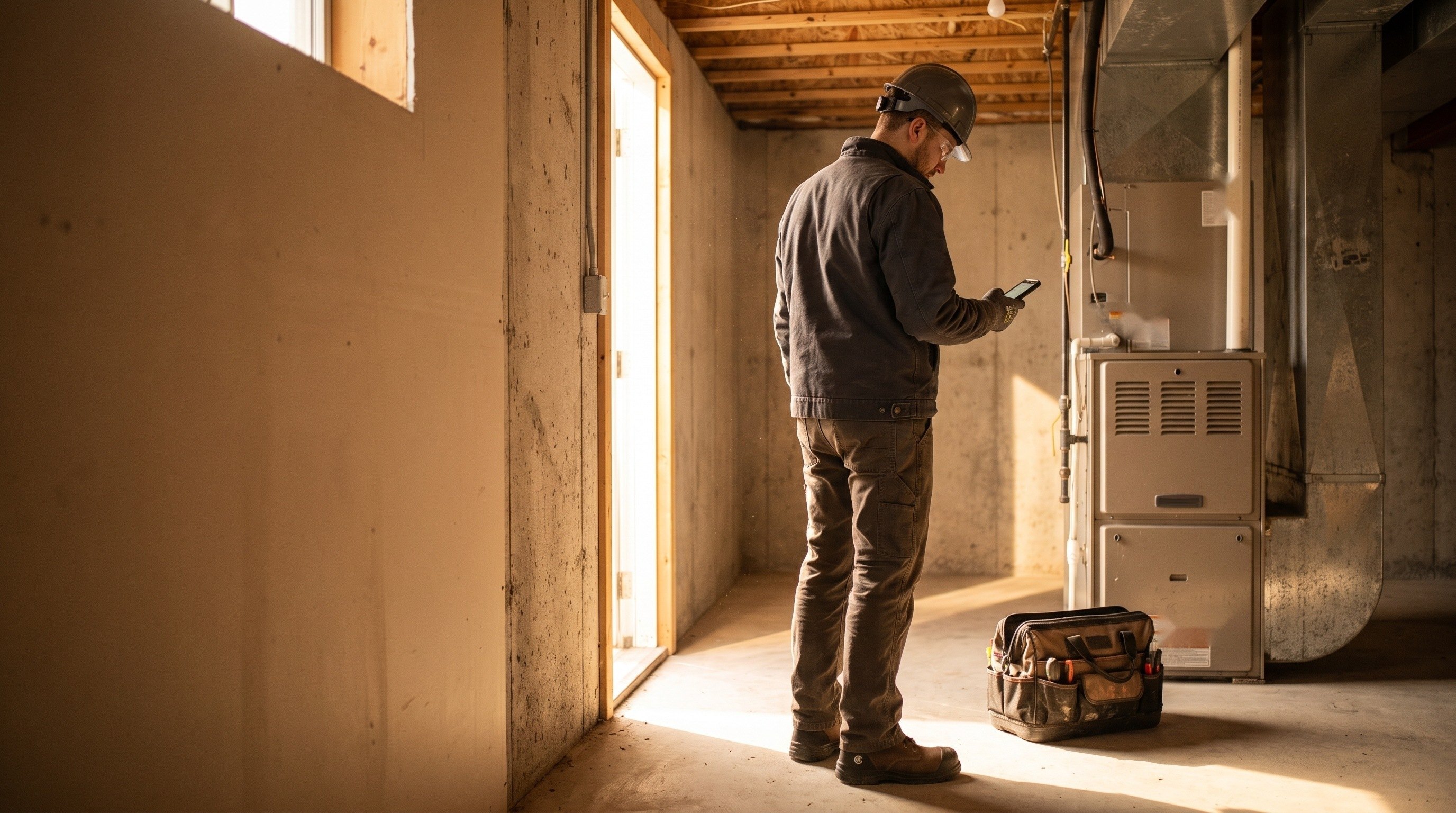
A crew that shows up at a different client site every day carries a different hazard profile than one working from a fixed shop - working alone, a location the company has never assessed before, and a trade license that doesn't substitute for OHS obligations.
Published 6 Sep 2026 · The On-Track Team · Reviewed by our ACSA and Energy Safety Canada certified auditors
5 min readKey Takeaways
- Working alone at a client site triggers OHS Code Part 28 - a communication system and regular check-ins, required under sections 393-394.
- Trade licensing (electrical, plumbing, gas) runs through the separate Safety Codes Act - it doesn't replace an employer's OHS obligations.
- The hazard assessment duty applies at any work site, including a client's home or business, with no ownership or control exception (section 7).
- Falls and electrical contact are consistently among the leading causes of trade and service-call injuries in Alberta's fatality investigation summaries.
- The most common manual gap: a fixed-worksite template with no working-alone procedure and no plan for assessing a new location every job.
- Who can help: On-Track Safety Solutions, a safety consulting company in Red Deer, Alberta, writes custom health and safety manuals for companies in Alberta and every other province, built to be COR, SECOR and ISNetworld ready. Custom safety manuals
1. Working alone
Part 28 of the OHS Code applies whenever a worker is working alone at a work site and assistance isn't readily available if something goes wrong - the ordinary situation for a technician doing a solo call with no coworker present. Section 393(2) treats working alone itself as a hazard under the general hazard-assessment duty, not an exception to it. Section 394 requires the employer to provide an effective communication system - radio, telephone, or another electronic method - with regular contact at intervals matched to the actual hazard of the work; where that kind of communication isn't practical, the employer has to either visit the worker directly or have the worker check in at appropriate intervals instead.
A check-in text isn't automatically compliant
2. Trade license vs. safety manual
Electrical, plumbing, and gas licensing in Alberta runs through the Safety Codes Act and the Safety Codes Council - a system built to protect the public by certifying that tradespeople and installations meet code. The OHS Act and OHS Code are a completely separate system focused on worker safety: hazard assessment, working alone, WHMIS, training, and the rest. A crew of licensed electricians or gasfitters still works for an employer carrying full OHS obligations - the trade license doesn't stand in for a safety program, and a manual that treats "our guys are all ticketed" as covering off worker safety is missing the point of both systems.
3. Hazard assessment at a client's site
Alberta's OHS Act defines a work site broadly as anywhere a worker is engaged in their occupation - a client's home or business qualifies exactly the same as a company-owned shop, with no exception for not controlling the location. Section 7 requires an employer to assess a work site and identify its hazards before work begins there, and that duty doesn't relax just because the address changes with every job. Falls and electrical contact are consistently among the leading causes of injury in Alberta's own worksite fatality investigation summaries for exactly this kind of work - a ladder at a residential job, an electrical panel tie-in - which is why a pre-job hazard check for an unfamiliar site belongs in the manual as its own procedure, not an afterthought.
Our Services
A manual built around mobile, site-varying work
Working alone procedures, client-site hazard assessment, and vehicle-based equipment tracking - built into your custom safety manual, not bolted on from a fixed-worksite template.
See custom safety manual options4. Where these manuals go wrong
The most common defect is a manual built for a fixed worksite and never adapted for a mobile trades operation: no working-alone procedure at all, no template for hazard-checking a location the crew has never seen before, and equipment tracked as if it lived at one shop rather than moving between trucks. The second most common: leaning on trade licenses as if they covered worker safety, when they're a completely separate system with a different purpose.
5. Frequently asked
What does Alberta's OHS Code require for a worker doing a solo service call?
Part 28 applies whenever a worker is working alone at a work site and assistance isn't readily available in an emergency - exactly the situation for a technician doing a solo call at a client's home or business. Section 393(2) treats working alone itself as a hazard under the general hazard-assessment duty. Section 394 requires the employer to provide an effective communication system - radio, phone, or another electronic method - with regular contact at intervals appropriate to the hazard of the work; where electronic communication isn't practical, the employer has to either visit the worker or have them check in at appropriate intervals instead.
Does a company still need a safety manual if its workers already hold trade licenses?
Yes - a trade license and a safety manual satisfy two different, unrelated systems. Electrical, plumbing, and gas licensing runs through Alberta's Safety Codes Act and the Safety Codes Council, and exists to protect the public and ensure installations meet code. The OHS Act and OHS Code are a separate system focused on worker safety - hazard assessment, working alone, WHMIS, and the rest. A licensed tradesperson still works for an employer with full OHS obligations; the license doesn't replace them.
Does the hazard assessment duty still apply when the company doesn't control the work site?
Yes, and this is worth being explicit about in a manual for a mobile trades company. Alberta's OHS Act defines a work site broadly as anywhere a worker is engaged in their occupation - a client's home or business qualifies the same as a company-owned shop, with no ownership or control exception. Section 7 requires an employer to assess a work site and identify hazards before work begins there, and that duty doesn't relax just because the location changes with every job.
What's the most common gap in a trades or service-call safety manual?
Treating the whole program as if crews worked from one fixed location. A manual copied from a construction or industrial template often has no working-alone procedure, no plan for hazard-assessing a location the company has never seen before a job starts, and no distinction between the trade license a worker holds and the OHS obligations the employer still carries regardless.