
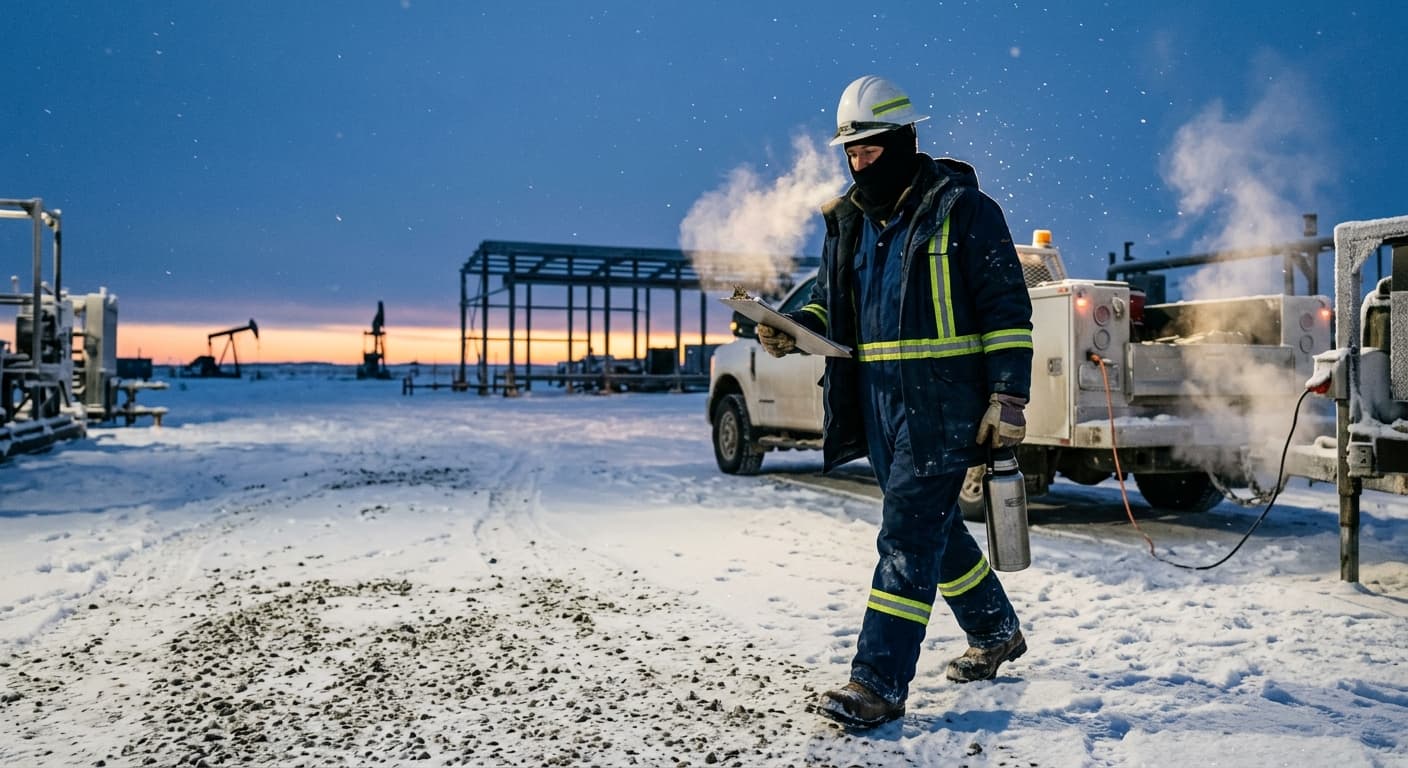
The same safety habits that keep a jobsite running well can keep your household safe over the holidays. Here is a practical look at travel, decorating, and hosting hazards worth planning around.
Most of the year, safety is something we associate with the jobsite: hard hats, hazard assessments, PPE. But the holiday season brings its own set of risks that have nothing to do with work and everything to do with home. Ladders come out of the garage, extension cords get pulled from storage bins, extra vehicles hit icy highways, and houses fill up with more people, more clutter, and more open flames than at any other point in the year.
None of this requires a safety certification to manage well. It requires the same mindset a good safety culture builds on any jobsite: look at the hazard before you start, plan for the conditions you are actually in, and do not assume last year's shortcut will work again this year. Here is a practical look at three areas where that mindset pays off most over the holidays: getting on the road, decorating the house, and hosting the people you love.
Winter travel and holiday driving
Highway conditions across Alberta, Saskatchewan, Manitoba and BC can shift fast in December, and holiday travel often means longer drives, unfamiliar routes, and more vehicles on the road at once. Before any trip of length, check the forecast and highway conditions through your provincial transportation website or Environment Canada, not just the weather app on your phone, since road-specific advisories catch closures and drifting that a general forecast will not.
- Confirm winter tires are actually on the vehicle and check tread depth, not just tire pressure, before a long trip.
- Pack a real winter emergency kit: blanket, extra layers, snacks, water, a flashlight, a small shovel, sand or kitty litter for traction, and a portable phone charger.
- Fill the tank before overnight parking in cold temperatures and keep it above half full on travel days, in case of a delay or closure.
- Build extra time into the schedule so a slow, cautious drive does not turn into a rushed one.
- Never drive after a long shift and a full day of holiday errands without checking in with yourself on fatigue first.
If you are hosting and serving alcohol, settle the designated driver or a rideshare plan before drinks start, not after. It is a five-minute conversation that removes the hardest decision of the night.
Decorating without a trip to the emergency room
Ladder falls and electrical mishaps send more people to the ER in December than almost any other home task, and the fix is the same discipline used on a jobsite. Match the ladder to the job, keep three points of contact at all times, and have someone hold the base when you are reaching for the roofline. Never stand on the top rung, and never use a chair or a stack of boxes as a substitute for the ladder you do not want to walk back to the garage for.
Extension cords and string lights deserve the same scrutiny you would give a cord on a worksite. Inspect for cracked insulation, exposed wire, or a plug that feels warm to the touch, and retire anything questionable rather than taping over it. Confirm outdoor lights are rated for outdoor use, keep connections up off wet ground or snow, and avoid daisy-chaining multiple extension cords or overloading a single outlet with too many strands.
Real trees, candles, and open flame
A dry Christmas tree is one of the more underestimated fire hazards in a Canadian home. Cut a fresh angle off the trunk before placing it in water, check the water level daily, and keep the tree at least a metre from any heat source, including fireplaces, space heaters, and heat vents. A tree that is drying out and dropping needles should come down before it becomes a hazard, not after the holidays end.
Candles are worth the same caution. Keep them away from decorations, curtains, and anything else that burns, place them where they cannot be knocked over by kids or pets, and never leave one burning in a room you are about to leave, even for a few minutes. Battery-operated candles do the job for most decorative purposes without the risk.
Fire and carbon monoxide prevention at home
Cold snaps push more households toward fireplaces, space heaters, and backup generators, and each one carries a carbon monoxide risk that is easy to overlook when everyone is focused on staying warm. Test smoke and carbon monoxide detectors before the season gets busy, and replace batteries if you have not already this year. If you use a fireplace, have the chimney inspected and cleaned before the first fire of the season, since built-up creosote is a leading cause of chimney fires.
- Keep space heaters at least a metre from anything flammable and never leave one running unattended or overnight.
- Run generators outdoors only, well away from windows and doors, and never in a garage even with the door open.
- Keep barbecues and propane appliances outdoors; they are not a substitute for indoor heat or cooking, ever.
- If you fry a turkey, do it outdoors, away from structures, on a stable surface, and never with a partially frozen bird.
Hosting family and guests safely
A full house changes the risk picture, even if nothing about the house itself has changed. Food safety matters most around the turkey: thaw it in the refrigerator rather than on the counter, cook to a safe internal temperature, and do not let leftovers sit out for more than about two hours. If you are hosting guests with food allergies, ask ahead rather than guessing, and keep ingredient lists handy for anything homemade.
Snow and slush tracked in from outside turns entryways and stairs slippery fast, particularly with more people coming and going than usual. A boot tray at the door and a quick wipe-down of hard flooring during a gathering costs little and prevents a fall. If young children are visiting a home that is not usually childproofed, do a quick walk-through for exposed outlets, unsecured decorations, and anything within reach on a low shelf or coffee table.
None of these habits require special equipment or a big time investment. They require the same thing a strong safety culture is built on at work: noticing the hazard before it becomes an incident. If your organization is working on building that same culture into daily operations, On-Track Safety Solutions supports employers across Western Canada with everything from safety manuals to online training, and we are always glad to talk.