
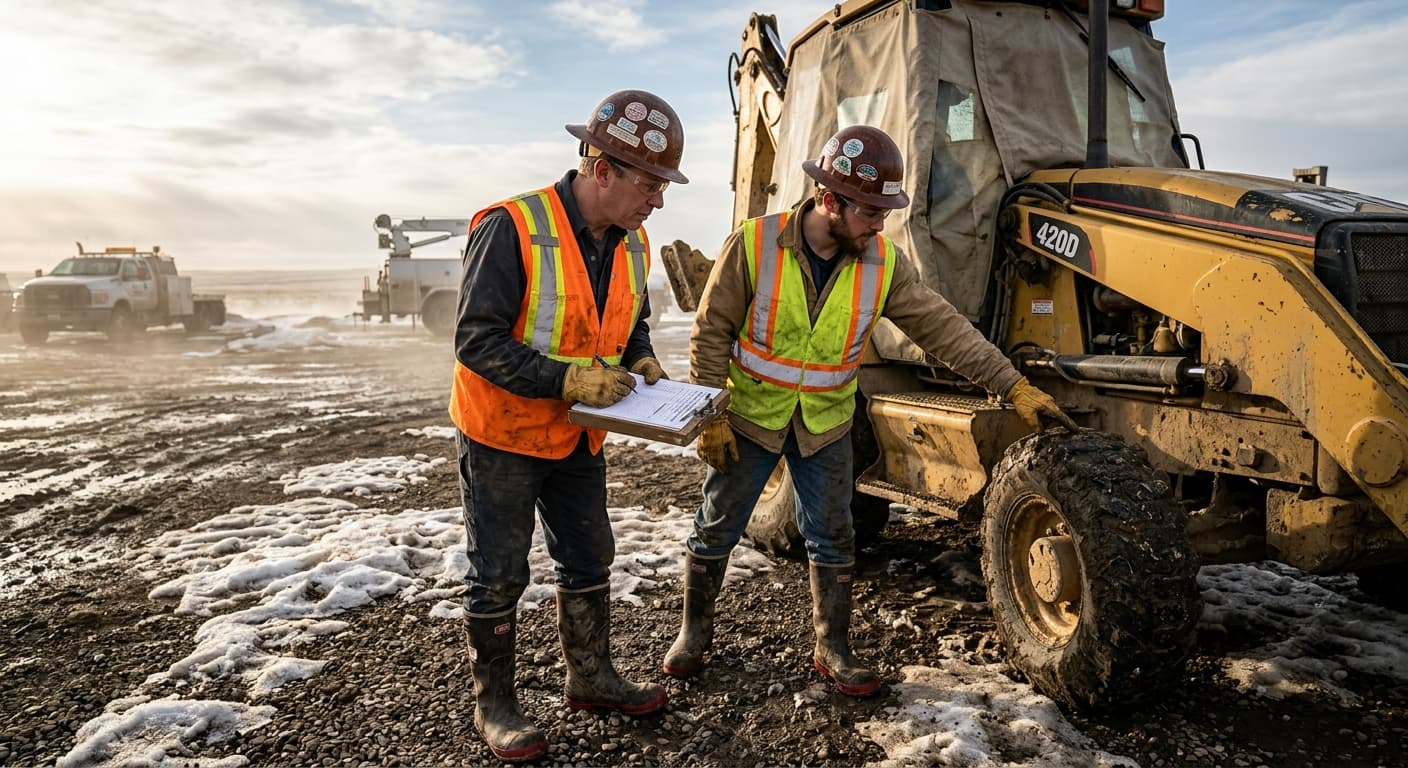
A practical 7-step checklist for general construction crews mobilizing after a Western Canadian winter: reassessing site hazards, inspecting stored equipment, refresher toolbox talks, and getting documentation current before boots hit the ground.
By the time frost is out of the ground in Alberta, BC, Saskatchewan, or Manitoba, most construction sites have been sitting idle, or nearly idle, for four to six months. Equipment has been parked, crews have been laid off or shuffled to other work, and the site itself has gone through a freeze-thaw cycle that can move ground, block drainage, and shift what was a stable laydown area into a mudhole. Treating spring mobilization as simply calling the crew back and picking up where you left off is how sites end up with a first-week incident.
This checklist is built for general construction start-up, commercial, residential, civil, whatever you run, not for lease sites or oilfield breakup season, which carry their own set of ground-disturbance and road-ban issues. If your work is on oil and gas leases, look for our breakup-season guidance instead. For everyone else getting a general contracting crew back on site this spring, here are the seven things worth doing before the first shift, not during it.
The 7-Step Pre-Mobilization Checklist
- Reassess site hazards that changed over winter
- Inspect and recommission equipment coming out of storage
- Run refresher toolbox talks before the first shift, not after
- Update emergency contacts, muster points, and the response plan
- Check PPE and fall protection gear for winter damage
- Confirm tickets and certifications haven't lapsed
- Review and update site documentation before crews arrive
Step 1 to 2: The Site and the Equipment Have Both Changed
A hazard assessment from last October describes a site that no longer exists. Spring runoff moves soil, undermines shoring, and can turn a previously firm access route into something a pickup truck sinks into. Frost heave shifts grade stakes, cracks pavement, and can leave buried services closer to the surface than your as-builts show. Before the first crew walks the site, someone needs to walk it first with fresh eyes and update the hazard assessment, not just re-file the old one.
- Walk the full site footprint, not just the active work area, looking for erosion, standing water, and washed-out access routes
- Check excavations, trenches, and shoring left open or backfilled over winter for shifting or collapse risk
- Confirm drainage is functioning and hasn't been blocked by ice, debris, or frost heave
- Re-flag or replace hazard signage and barricades that came down or faded over winter
- Note any new hazards adjacent to the site, since neighbouring lots and roadwork don't pause for your shutdown
Equipment that sat outside or in unheated storage all winter needs more than a walk-around before it goes back into service. Hydraulic lines get brittle in cold, seals shrink and can leak once warmed and pressurized, batteries lose capacity from months of disuse, and tires develop flat spots or lose pressure. Fuel that sat all winter can gum up injectors, and rodents are a real problem for wiring harnesses in stored equipment.
- Pull pre-use inspection records forward and run a full inspection before first use, not the abbreviated version
- Check fluid levels and look for leaks that weren't there in the fall, particularly hydraulic and coolant lines
- Test batteries and charging systems rather than assuming a jump-start means the unit is fine
- Inspect tires and tracks for flat-spotting, cracking, and correct pressure
- Check for rodent or insect damage to wiring, hoses, and cab interiors
- Confirm fire extinguishers and first aid kits mounted on mobile equipment weren't removed or expired over winter
Step 3 to 6: Getting the Crew's Head Back in the Game
Workers coming off a winter layoff, or off a different job entirely, don't walk back onto site with the same situational awareness they had in November. A short refresher toolbox talk before the first shift, covering the specific hazards you just identified in the site walk, is worth more than a generic safety meeting on day three. Cover what's actually changed: new site layout, new subcontractors on site, any near misses or incidents from last season worth reviewing before they repeat.
Emergency response plans go stale the same way hazard assessments do. If muster points, site access, or nearby traffic patterns changed over winter, update the plan before anyone needs it, not after. Confirm emergency contact numbers are still correct, including the nearest hospital or clinic, the local fire department, and whoever internally is responsible for WCB reporting if something happens.
- Cover site-specific spring hazards in a toolbox talk before the first shift, not as a follow-up
- Review any incidents or near misses from the previous season with returning crew
- Post updated muster points and emergency contact numbers where they're actually visible
- Confirm the emergency response plan still matches current site access and layout
- Check fall protection harnesses, lanyards, and anchor points for cracking, mildew, or UV damage from storage
- Verify WHMIS training, fall protection tickets, confined space tickets, and other certifications haven't lapsed for anyone on the crew
Fall protection gear stored in a damp shop or job trailer over winter is worth inspecting individually, not batch-approving. Webbing that's been sitting folded and slightly damp can develop mildew and lose strength in spots you won't see without unfolding and checking every harness and lanyard by hand.
Step 7: The Paper Trail Before Boots Hit the Ground
Spring is also the practical moment to get your documentation caught up before the season's pace makes it harder. If your safety manual hasn't been touched since last year, a quick review against current regulation and current scope of work is worth doing now, not in June when you're mid-project. If a COR or SECOR audit is coming up this year through your provincial certifying partner, whether that's ACSA in Alberta construction or another provincial body, spring is a reasonable time to get your documentation, training records, and inspection logs in order rather than scrambling before the audit window.
If your crews are still filling out paper forms for pre-use inspections, hazard assessments, or toolbox talks, this is also a natural point to move to a digital system so records don't go missing over a busy season. Whatever the format, the goal is the same: the paperwork should reflect what's actually happening on site this spring, not what was true last fall.
- Review and update the safety manual against current scope and regulation
- Confirm inspection, training, and toolbox talk records are current and accessible
- If a COR or SECOR audit is scheduled this year, start gathering documentation early rather than at the deadline
- Consider a digital forms system if paper records have been getting lost or delayed
- Make sure new hires and returning crew have completed site-specific orientation before their first shift
None of these seven steps take long individually. Together, they're the difference between a spring start-up that catches problems on a Tuesday morning walk-around and one that finds them the hard way once equipment and crews are already committed to the schedule. If you want a second set of eyes on your site hazard reassessment, your safety manual, or your COR or SECOR readiness before mobilization, that's exactly the kind of work we do.