When a company grows beyond a small crew, SECOR starts to feel restrictive. Here is how to transition to COR and prove your safety system works in the field.
If your company has grown beyond a small crew, SECOR will eventually feel restrictive. More sites, more subcontractors, and more client prequalification requirements create a complexity that exposes gaps in documentation, supervision, and training. The move to COR is about proving your system works in the field, not just on paper.
A strong transition starts with clean evidence, a clear training matrix by role, and consistent supervisory practices across all crews. Before you plan the audit, confirm you have enough history - many certifying partners expect twelve months of records for an initial certification.
Where transitions fail
Auditors focus on interviews, observations, and documentation - not the policy binder. The common failure points are field-level hazard assessments that list tasks but not specific controls, inspections with no corrective action trail, training logs that are not tied to positions, and workers who cannot explain their rights and responsibilities.
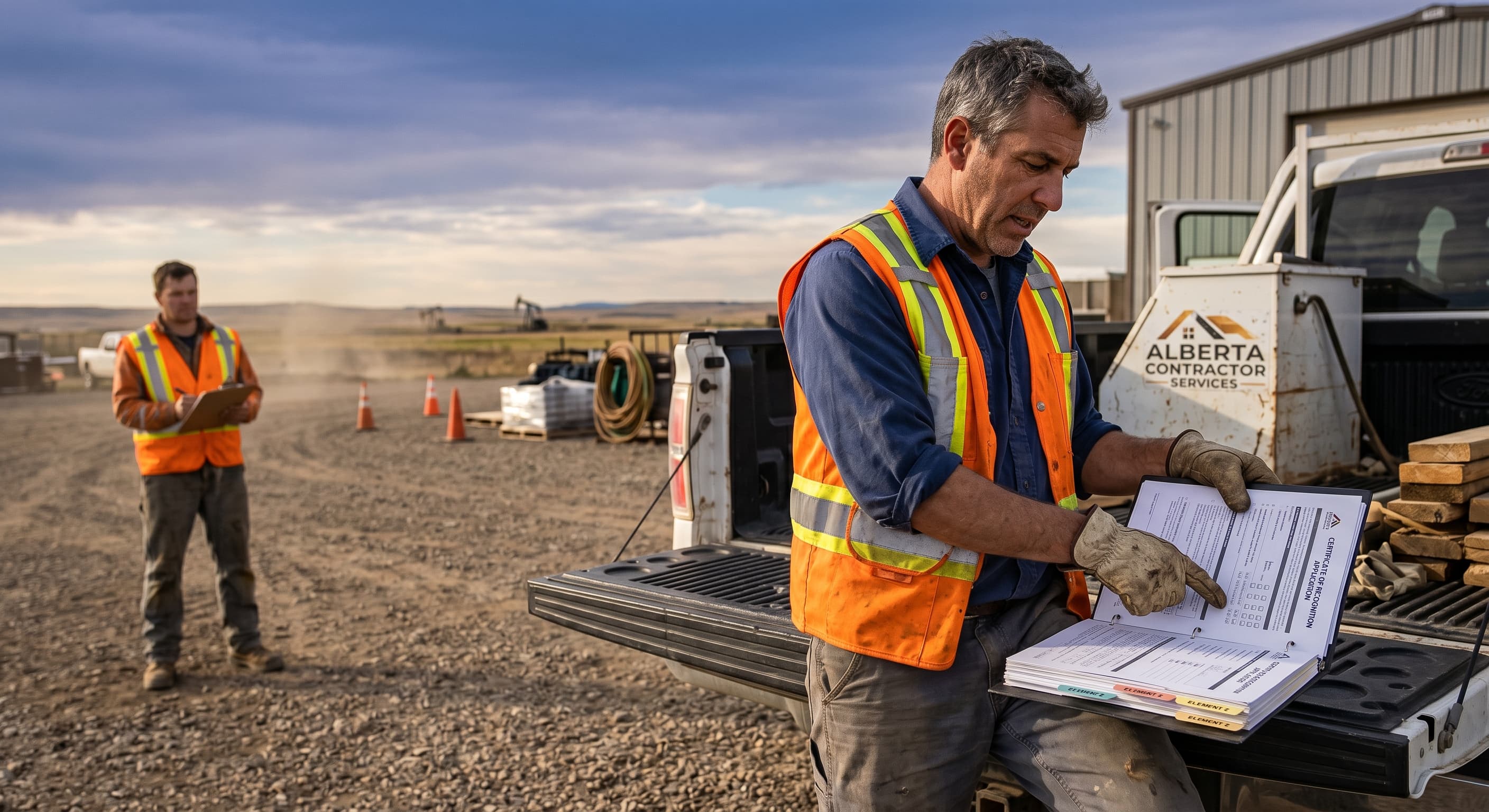
Good looks like this: a foreman runs a pre-job hazard assessment, names the top risks, completes an FLHA, assigns controls, and has everyone sign off. When a near miss happens, the investigation cites that FLHA and the corrective action appears on a tracked log with a completion date. In interviews, workers can explain how they identify hazards and use stop-work authority. That is credible, repeatable, and audit-ready.
A SECOR-to-COR checklist
- Compare your safety program against the full COR requirements for your province.
- Replace generic or outdated policies with audit-tested documents.
- Formalize your workplace inspection and corrective action process.
- Ensure every supervisor has taken supervisor-level safety leadership training.
- Book a certified external auditor at least 90 days out.
- Conduct an internal review using the same criteria your auditor will use.
- Keep records clean, current, and easy to access during site visits and interviews.
Who owns what
- Workers: use FLHAs and hazard assessments, follow controls, report hazards and near misses, and provide certificates to supervisors.
- Supervisors and foremen: lead FLHAs and toolbox talks, verify controls, document inspections, and close corrective actions.
- Management: resource corrective actions, review monthly safety metrics, and support field execution.
The jump from SECOR to COR is a full upgrade in how a company proves safety accountability. SECOR audits often accept informal records and part-time oversight; COR requires a robust system backed by documentation, training, and leadership competency. If your company has grown past a small crew, taken on more complex work, or expanded across provinces, it is time to evaluate whether your program can pass a full-scope COR audit.
On-Track Safety supports the SECOR-to-COR transition with a COR-ready custom safety manual, access to a qualified external auditor, and a pre-audit documentation review. Get in touch to plan your upgrade.