
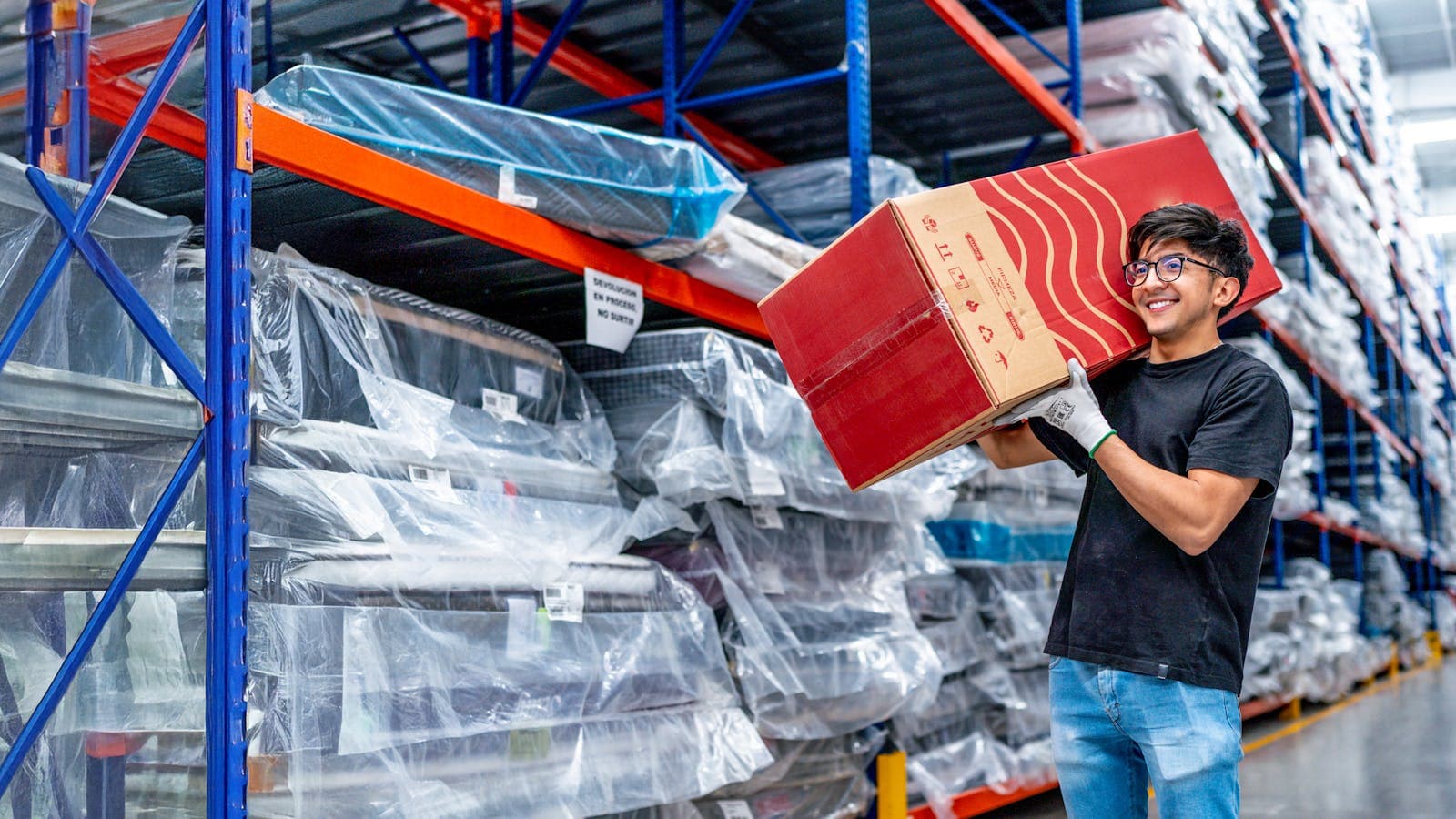
Concrete guidance on lift mechanics, mechanical aids, task rotation, and what a documented ergonomics assessment needs to contain to actually reduce back injury claims and hold up under audit.
Back injuries are consistently one of the most frequent and most expensive claim categories that workers compensation boards track, and the reason is rarely a single dramatic incident. Most back injuries at physical worksites build up from repeated poor lifting mechanics, loads handled without the right equipment on hand, and jobs designed with no rotation between heavy and light tasks.
This guide skips the generic wellness advice and gets into the specifics: how to lift correctly, when a mechanical aid stops being optional, how task rotation reduces cumulative strain, and what a documented ergonomics assessment needs to contain to hold up as real evidence during a COR or SECOR audit.
Why This Injury Category Gets So Much Attention
Back injuries tend to be claim-heavy because they are rarely one-and-done. A strain that starts as a few missed shifts can become a recurring claim with modified duty, physiotherapy, and repeat time-loss if the underlying task that caused it is never fixed. In Alberta, WCB's Partnerships in Injury Reduction program pays employers the highest of a flat COR maintenance rate, a rate for improved safety performance, or a rate for below-average claim costs, capped at 20 percent, and SECOR-certified employers earn the same structure. Reducing the frequency and severity of back injuries has a direct line to that below-average claim cost rate, which is exactly why it is worth building a real program around instead of a poster in the lunchroom.
The Mechanics of a Safe Lift
Most manual handling injuries trace back to the same handful of mechanical errors: bending from the waist instead of the hips and knees, twisting the spine under load, holding a load away from the body, or lifting faster than the load requires. None of these are complicated to correct, but they need to be taught as a specific sequence, not a one-line reminder to lift with your legs.
- Plant your feet shoulder-width apart with one foot slightly ahead, positioned as close to the load as possible.
- Bend at the hips and knees, not the back, keeping your spine in a neutral position rather than rounded or arched.
- Get a firm grip on the load using handles or a solid hold before you commit to lifting.
- Keep the load as close to your body as you can through the entire lift, not extended at arm's length.
- Lift by straightening your hips and knees in one smooth motion, never jerking or snapping the load upward.
- If you need to change direction, pivot with your feet. Never twist your spine while carrying or holding a load.
- Set the load down with the same control you used to pick it up, reversing the hip-and-knee motion rather than dropping or dumping it.
When a Mechanical Aid Stops Being Optional
A mechanical aid should be treated as required equipment for a task, not a convenience for a worker who happens to reach for it. Hand trucks, dollies, pallet jacks, lift tables, hoists, and slings all exist because human backs are a poor long-term substitute for a machine that was built to move weight. If a task involves awkward reach, an unstable or unbalanced load, repeated lifts of the same weight across a shift, or a single load heavy enough to make a worker brace or hesitate before picking it up, that is the signal to bring in an aid rather than push through.
A practical rule of thumb: if a lift requires bending the back more than slightly forward, or twisting under load to complete it, stop. Get a second person, get a mechanical aid, or redesign how the task is done. Do not treat that moment as something to push through.
Task Rotation and Job Design
Rotating workers between physically demanding tasks and lighter ones across a shift reduces the cumulative loading that causes soft-tissue injuries, even when no single lift looks dangerous on its own. A worker who repeats the same bending or carrying motion for an entire shift is at higher risk than one who alternates that task with something that uses different muscle groups, even if the total physical output ends up similar.
Job design matters as much as rotation. Storing frequently used heavy items at waist height instead of on the floor or a high shelf removes the worst part of the lift before a worker ever touches the load. Reviewing where materials are staged, how far they get carried, and how often a task repeats in a shift is often a cheaper fix than any amount of training, because it removes the hazard instead of asking a worker to manage it correctly every single time.
What a Documented Ergonomics Assessment Actually Contains
A verbal walkthrough is not documentation, and it will not hold up as evidence if an auditor or an adjuster asks for it after a claim. A proper ergonomics assessment for a physical task needs to be a written record that identifies the specific hazard and the specific control, not a general statement that lifting hazards were considered.
- The task being assessed, described specifically enough that someone unfamiliar with the site could picture it.
- The weight of the load being handled, and where that figure came from (a scale, a spec sheet, or a measured estimate).
- The frequency and duration of the task across a shift, since a light load repeated hundreds of times carries real risk.
- The posture required, noting any bending, twisting, reaching above shoulder height, or awkward grip.
- Photos of the task being performed, including any mechanical aid in use.
- The controls identified, ranked using the hierarchy of controls so engineering fixes are considered before administrative changes or PPE.
- A sign-off date and a review date, so the assessment gets revisited on a schedule or after any related incident, not left to go stale.
Assessments built this way do two things at once. They give supervisors a real reference for training new workers on the correct way to do a specific job, and they give you a defensible paper trail if a claim ever comes in questioning whether the hazard was identified and controlled.
Building This Into Your Safety Program
None of this works as a one-time exercise. Lift mechanics need to be part of new-worker orientation, not a slide shown once and forgotten. Field observations need to actually catch and correct poor technique on the ground, not just check a box. And ergonomics assessments need a real place to live in your safety manual, with a review cycle attached, so they age with the worksite instead of describing a job that no longer exists.
On-Track Safety Solutions builds ergonomics documentation into custom safety manuals, structures new-worker orientations around the specific manual handling tasks a site actually performs, and can run field observations that catch poor lifting technique before it becomes a claim. If your current program treats back injury prevention as a poster and a verbal reminder, that gap is worth closing before it shows up in your claims history. Contact us to talk through what a documented ergonomics program should look like for your worksite.