Fifteen real toolbox talk topics for Canadian worksites, from cold stress and wildfire smoke to lockout/tagout and lone worker check-ins, plus how to run a genuine 10-minute talk instead of a lecture.
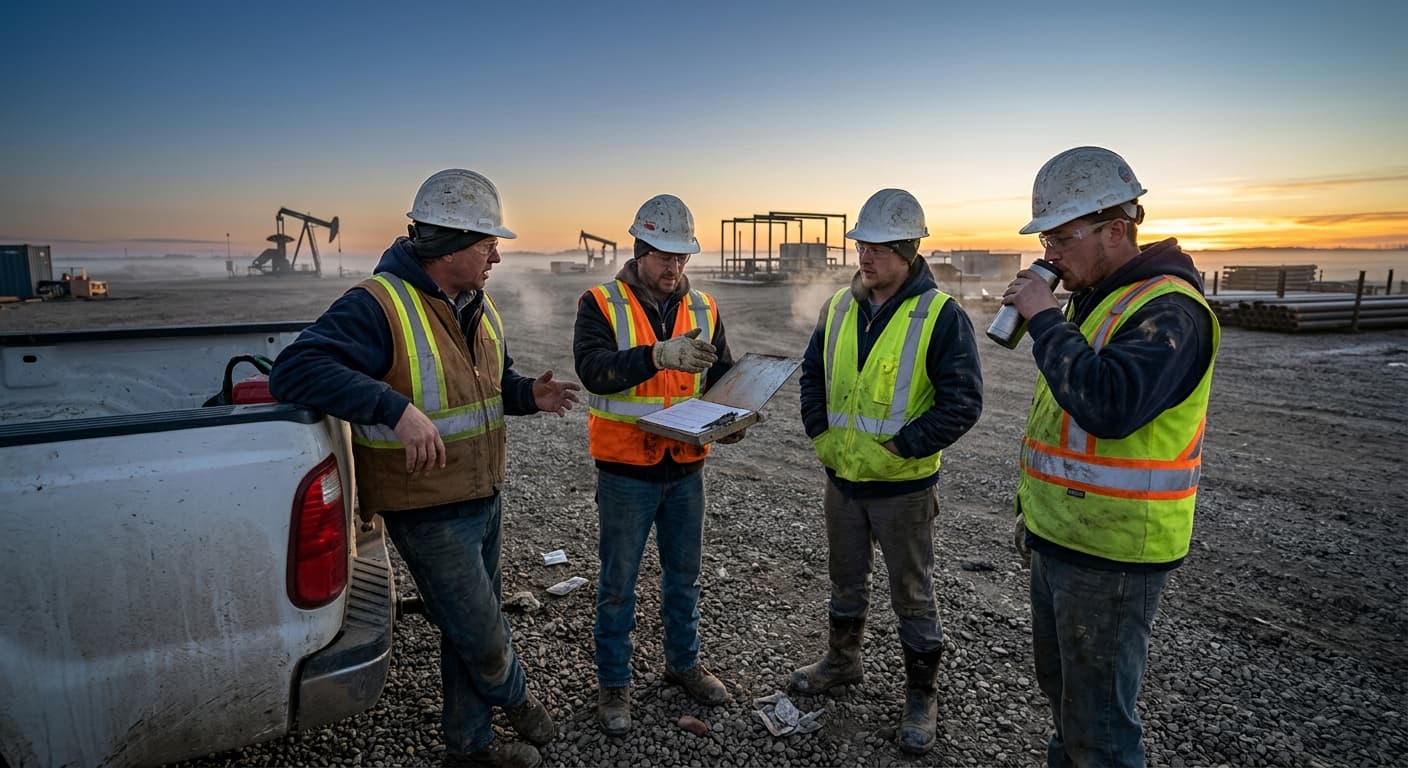
A toolbox talk is not a safety meeting. It is five to ten minutes before the work starts, focused on one real hazard tied to what the crew is about to do. The problem on most Western Canadian sites is not that toolbox talks aren't happening, it's that the same three topics get recycled all winter and all summer until nobody is listening anymore.
Rotating through a genuine range of topics keeps the talks relevant to the season and the task at hand, and it builds a stronger record for COR and SECOR audits, where reviewers look for a functioning program, not a stack of identical forms. Below are 15 topics worth having in rotation, grouped by the kind of hazard they address, followed by a short note on running the talk itself.
Why rotating topics matters
Crews tune out repetition fast. If the toolbox talk is fall protection every single week regardless of whether anyone is working at height that day, it stops functioning as a hazard reminder and starts functioning as a box to check. Matching the topic to the season, the task, and recent near misses keeps the five minutes useful, and it shows up in the paperwork as a program that is actually responding to conditions on site rather than running on autopilot.
15 topics worth rotating through
Seasonal and environmental hazards
- Cold stress and frostbite recognition. Sites across Alberta and Saskatchewan work through stretches at minus 30 and colder, and exposed skin can develop frostbite in under half an hour without a worker noticing it happening.
- Heat stress and hydration. A crew doing manual labour on asphalt or inside a metal building in July can hit heat exhaustion by early afternoon, and it is prevented with scheduled water breaks and shade, not toughness.
- Wildfire smoke and air quality. BC and Alberta summers now regularly bring Air Quality Health Index readings that call for reduced exertion or respiratory protection, and a short talk on checking the AQHI before a shift is cheap insurance against a bad exposure day.
- Ground disturbance and utility locates. Striking a buried gas or power line is one of the most preventable serious incidents in construction, and any site doing excavation should confirm locates are current before the first shovel goes in.
- Freeze-thaw ice and footing. A laydown yard or parking area that is dry at 8 a.m. can be glare ice by late afternoon once temperatures swing, and that transition catches more workers off guard than a full winter storm does.
Physical and mechanical hazards
- Fall protection anchor points and harness inspection. A harness with a frayed strap or a D-ring that will not lock is not fall protection, it is a false sense of security, and a two-minute pre-use check catches most of what fails.
- Lockout/tagout on equipment being serviced. Equipment that looks powered down can still hold stored energy, and skipping the lock for a quick fix is behind a large share of the amputation incidents provincial regulators investigate.
- Confined space entry and atmospheric testing. Low oxygen or elevated H2S in a tank, pit, or vault is invisible and odourless at the concentrations that cause harm, which is why gas testing before entry is never optional.
- Overhead and underground power line awareness. Crane booms, dump truck boxes, and even long-handled tools can arc from metres away near energized lines, and every operator on site should know the minimum approach distance for the voltage nearby.
- Mobile equipment blind spots and spotter signals. A loader or haul truck has blind spots large enough to hide a person standing still, and a talk that walks the crew through the agreed hand signals removes the guesswork.
Human factors and site culture
- WHMIS 2015 labels and Safety Data Sheets. A new chemical product on site is a hazard until someone has actually read its SDS, not after the first exposure or spill.
- Fatigue and impairment, including cannabis. Impairment is not only drugs and alcohol; a worker running on four hours of sleep and operating equipment is a documented risk, and crews need a straightforward way to flag it that does not immediately become a discipline conversation.
- Working alone and check-in protocols. Anyone doing a solo site visit, a delivery, or an after-hours callout needs an agreed check-in time and a clear plan for what happens if that check-in is missed.
- Housekeeping and slip, trip, fall hazards. Cords, hoses, and staged material left in walkways cause more recordable injuries than most of the hazards that get more attention, and fixing it costs nothing.
- Manual handling and ergonomics. Back injuries from lifting and repetitive tasks build up over weeks, not from one bad lift, so a talk on team lifts and mechanical aids is worth repeating even when it feels basic.
Running an effective 10-minute toolbox talk
The format matters as much as the topic. A toolbox talk that turns into a 30-minute lecture stops being a toolbox talk, and a crew that is only being talked at will not retain much of it.
- Pick one topic, not three, and tie it to the work actually happening that shift. Before an excavation, talk about locates, not fall protection.
- Open with a question rather than a statement. Asking whether anyone has had a near miss with the topic gets the crew talking instead of nodding along.
- Keep it to 10 minutes. If it is running longer, it has become a training session, which has its own place and its own record.
- Get it in writing. Date, topic, names, and signatures on record, since COR and SECOR auditors will ask to see toolbox talk documentation as part of the field-level hazard assessment element.
- Rotate who leads it. Having a different crew member run the talk each week builds ownership and often surfaces a hazard a supervisor would have missed.
If a site's toolbox talk records show the same two or three topics for six months straight, that is exactly the kind of gap a COR or SECOR auditor will flag as a training program that is not really functioning. Rotation matters as much for the audit trail as it does for the crew.
Keeping the record straight
Toolbox talks are cheap to run and easy to let slide on documentation, which is where they tend to cost points in an audit. Logging them consistently, whether on paper or through a digital safety form platform, is the difference between a program that looks good on a random week and one that holds up when a certifying partner asks to see six months of records. On-Track works with Alberta, BC, Saskatchewan, and Manitoba employers on building that kind of documentation into COR and SECOR audits, contractor management files, and field safety programs, so the paperwork matches what is actually happening on site.