
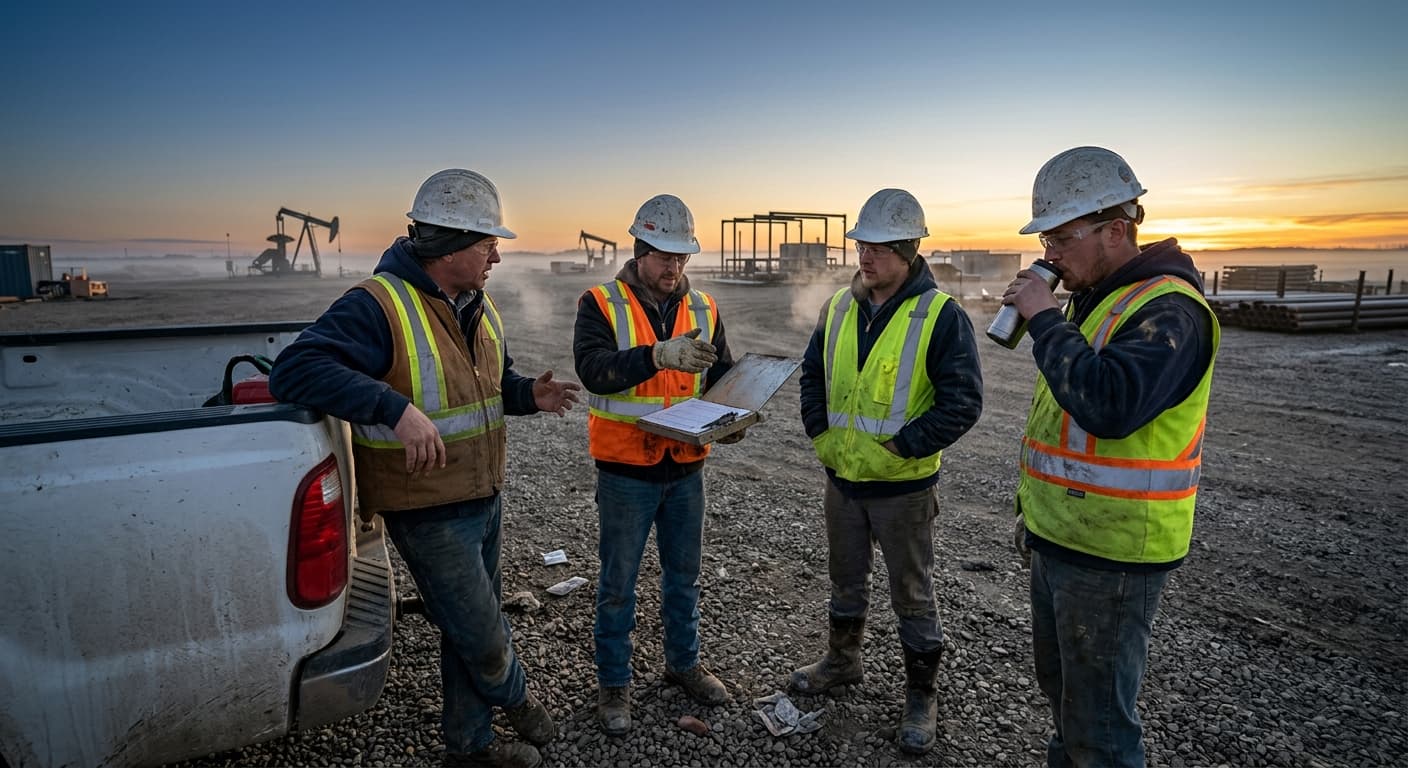
A binder that copies generic evacuation language will not hold up when something actually happens. Here is how to build site-specific hazard scenarios, a drill schedule that matches your real risk, and the documentation trail that proves both to an auditor.
Most workplaces have an emergency response plan because someone told them they needed one, not because anyone expects to use it. It sits in a binder in the lunchroom, or a PDF nobody has opened since it was uploaded, written in generic language that could describe any workplace in the country. Nobody notices the gap until something actually happens: a worker goes down in a confined space, a forklift pins someone against a rack, a chemical line lets go in the shop. That is the wrong moment to discover the plan does not match the site.
An ERP that holds up in a real emergency has three things a template copied off the internet does not: hazard scenarios written for your actual worksite, a drill schedule people actually run, and a documentation trail that proves both happened. Those same three things are what a COR or SECOR auditor is looking for when they pull your emergency preparedness records. Building for the audit and building for the actual emergency turn out to be the same job, done properly once.
The problem with the generic template
Downloaded or purchased ERP templates tend to cover the same three scenarios regardless of industry: fire, medical emergency, severe weather. That is a reasonable starting point, but it stops being useful the moment your operation has anything the template writer never saw. A concrete pumping crew working near energized overhead lines needs a contact-with-power-lines procedure. A shop running solvents and coatings under WHMIS 2015 needs a spill response with actual product names and SDS locations, not a paragraph about "hazardous materials." A site an hour from the nearest hospital needs a plan that accounts for that drive time instead of assuming an ambulance shows up in ten minutes.
The tell is usually in the language. If your plan says "the designated person will assess the situation and contact emergency services," without naming who that person is on this crew, on this shift, at this site, it was written to satisfy a checklist item, not to guide someone through a bad ten minutes.
Build scenarios from your actual hazards, not a checklist
The fastest way to make an ERP site-specific is to stop starting from a blank template and start from documents you already have. Your hazard assessment or job hazard analysis already lists the things that can go wrong on this site. Your incident and near-miss log already tells you what actually has gone wrong. Between those two, you have most of the scenario list already written, it just has not been turned into a response plan yet.
- Pull every hazard rated moderate or higher from your hazard assessment and ask what an emergency response to it looks like, not just how to prevent it.
- Check your incident and near-miss log for the last two to three years and make sure anything that actually happened is covered.
- Factor in site-specific realities: remote location, single access road, radio or cell dead zones, seasonal access changes, on-site utilities.
- Name an actual person or a specific role filled every shift for each response step, not a generic title that may not be staffed when it matters.
- Confirm evacuation routes and muster points against the current site layout, not the layout from when the plan was first written.
If the nearest hospital is 40 minutes away, your medical emergency procedure needs to reflect that gap: first aid capacity on site, who drives if ground ambulance is not fastest, and how STARS or another air ambulance gets requested. A plan that assumes a ten-minute EMS response because that is what the template said will fail exactly when it is tested.
Run drills that match the risk, not the calendar
A fire drill once a year satisfies the letter of most policies and does almost nothing to prepare a crew for a confined space rescue or a chemical spill, because those events are rarer and more severe, and the response is more specialized. Match drill type and frequency to what could actually happen and how often your crew turns over, not to a single annual date circled on a calendar.
- Fire and evacuation: practiced enough that new hires have been through one within their first few shifts, not just annually.
- Tabletop exercises for lower-frequency, high-severity scenarios such as confined space rescue, chemical release, or a serious mobile equipment incident, where a full physical drill is impractical but talking through the response is not.
- A drill or orientation walkthrough triggered whenever a new hire cohort starts, rather than waiting for the next scheduled date.
- A drill repeated after any near miss connected to that scenario, since that is the clearest signal the current response is not sticking.
On-Track's field safety team can observe and help run drills on active sites, which does two things at once: it gives you an outside set of eyes on whether the response actually works, and it produces an independent record that the drill happened as described.
The documentation trail an auditor actually checks
A written ERP with no evidence behind it reads to an auditor exactly like a plan nobody follows, because from the paperwork alone there is no way to tell the difference. What closes that gap is a specific, dated record for every drill and every review, kept somewhere it can actually be produced on request rather than somewhere it gets lost.
- A drill log for each exercise: date, scenario tested, who participated, what worked, what did not, and what corrective action came out of it.
- Evidence those corrective actions were closed out, not just identified and forgotten.
- A revision history on the ERP itself showing it gets reviewed on a set schedule, not only after someone notices it is out of date.
- A current emergency contact list, checked against who is actually on shift and who has actually left the company.
- Proof the plan is accessible to workers on the floor, not just filed in an office binder nobody on shift has seen.
That drill log and revision history are usually the first two documents an auditor asks for after the written plan itself, because they answer the real question: does this document reflect what the site actually does, or was it written once and left alone.
Keep it current between audits
An ERP is not a document you finish. It needs a trigger list for revision, not just a review date on a calendar: new equipment brought on site, a new work location, any incident that exposed a gap in the response, a regulatory change, or a named responder leaving the company. If a plan still lists a supervisor who has not worked there in a year, that is the fastest way for an otherwise solid plan to fail an audit and, worse, fail a crew in the moment it is actually needed.
If your ERP is still built from a template you have not touched since it was purchased, that is worth fixing before your next COR or SECOR audit, not during it. On-Track builds emergency response plans as part of full safety manual development, and can run drill observation and gap review separately if the plan itself is already in reasonable shape. Reach out through the contact page to talk through where yours stands.