Confined space fatalities follow a predictable pattern that atmospheric testing, entry permits, and a proper rescue plan are built to break. Here is what a program that actually works looks like.
Confined space entry is one of the few workplace activities in Canada where a single unplanned entry can kill more than one person in under a minute. Storage tanks, vessels, silos, sewers, manholes, pits, and trenches show up across every sector On-Track works in, from oil and gas facilities to agricultural operations to general construction sites. The space itself does not have to move, collapse, or malfunction to be lethal. An atmosphere can turn immediately dangerous to life before anyone smells or sees a warning sign.
This post is not a general introduction to confined space hazards. It is a walkthrough of the four elements that actually stop a confined space entry from becoming a fatality: atmospheric testing, a working entry permit system, a dedicated attendant, and a rescue plan that exists before anyone goes in. Skip any one of these and the other three cannot compensate for it.
Why Confined Space Incidents Are Disproportionately Fatal
Compare a confined space incident to a typical struck-by or fall incident. Most workplace injuries happen to one person, and there is usually time for someone to respond. Confined space incidents behave differently. A worker can lose consciousness from oxygen deficiency within seconds, with no visible cause and no chance to self-rescue. Engulfment in grain, sand, or fine powder can bury a worker in under a minute once material starts to flow, and the weight of it makes self-extraction close to impossible even for a conscious, uninjured person.
The second reason confined space incidents are disproportionately fatal is the rescue response itself. A coworker who sees someone collapse in a tank or pit has a strong instinct to climb in and help. Without atmospheric testing, retrieval equipment, or a rescue plan, that instinct turns one casualty into two, because the condition that incapacitated the first worker has not changed for the second. This pattern, more than any other, is why the permit and attendant requirements below are separate, non-negotiable steps rather than suggestions folded into a general procedure.
- Atmospheric: oxygen deficient (below 19.5%) or enriched (above 23%) air, flammable or explosive gas concentrations, toxic gases such as hydrogen sulphide or carbon monoxide
- Engulfment: grain, sand, gravel, liquid, or fine powder that can trap or bury a worker
- Mechanical: augers, agitators, mixers, or conveyors that were not fully isolated before entry
- Physical and access: extreme temperature, poor lighting, and restricted entry or exit points that slow both self-rescue and assisted rescue
Atmospheric Testing Requirements
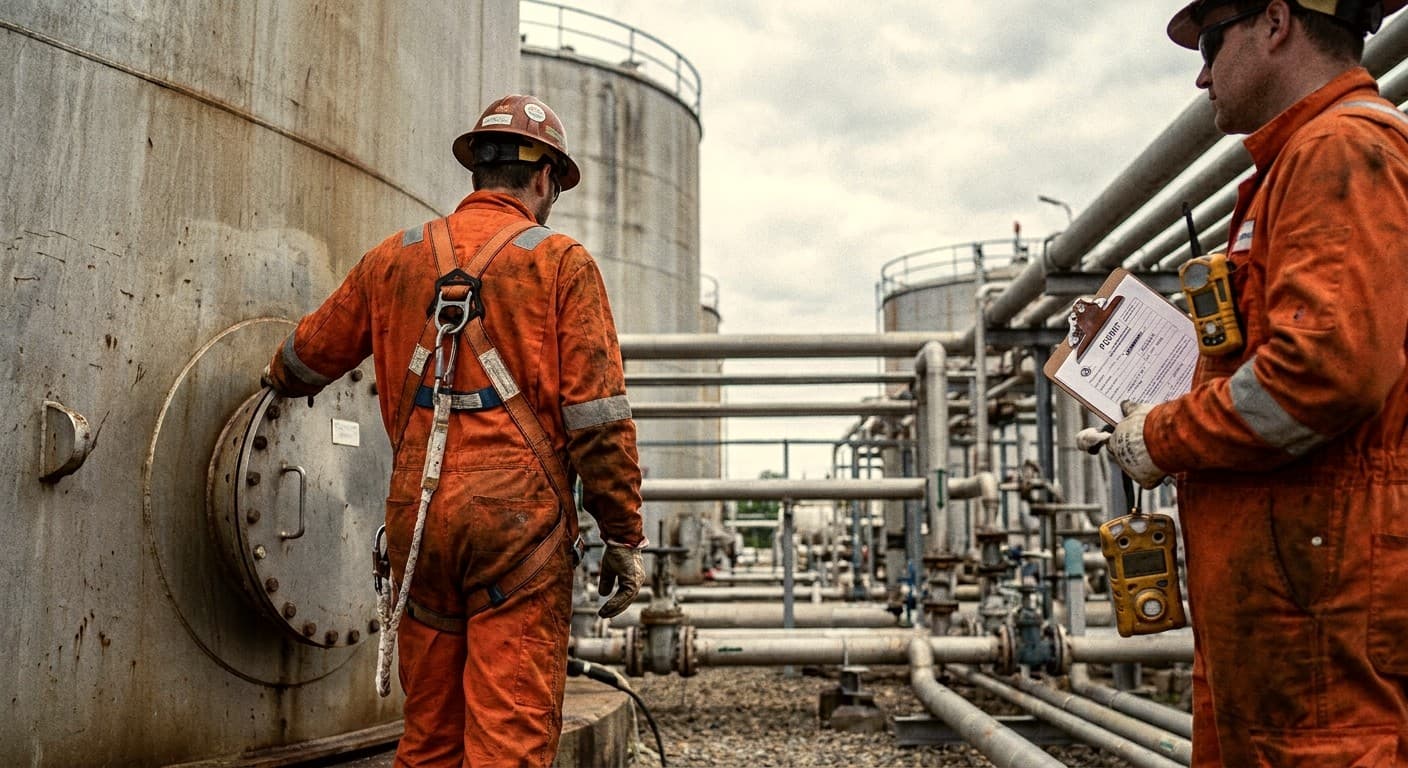
Atmospheric testing is not a one-time check at the hatch. A trained, competent person tests the air before anyone enters, using a calibrated multi-gas detector, and testing continues at intervals or continuously for the duration of the entry depending on the hazard profile of the space. Testing follows a specific sequence because each reading informs the next: oxygen first, then flammability against the lower explosive limit, then toxic gases such as hydrogen sulphide and carbon monoxide.
- Oxygen: acceptable range is 19.5% to 23%. Below or above that range, no entry.
- Flammability: atmosphere must stay below 10% of the lower explosive limit (LEL)
- Toxic gases: hydrogen sulphide and carbon monoxide are the two most common in Western Canadian confined spaces, tested against occupational exposure limits
- Stratification: test at multiple levels within the space, not just at the opening, since gases layer by density
Every reading gets logged on the permit with the time it was taken. If conditions change once workers are inside, whether from welding fumes, off-gassing material, or a ventilation failure, the space has to be evacuated and retested before re-entry. A permit is only as good as the testing behind it.
The Entry Permit System
A confined space entry permit is a site-specific, shift-specific document, not a form filled out once and reused for every entry into the same tank. Each permit ties a named space to a specific date, time window, and crew, and it expires when the shift or the conditions change, whichever comes first.
- Space identification and description of the work to be performed
- Hazard assessment specific to that space and that task
- Atmospheric test results with the time of each reading
- Isolation and lockout status for any connected mechanical or electrical systems
- Ventilation method in use, if forced-air ventilation is required
- Required personal protective equipment
- Name of the designated attendant
- Rescue plan and contact information for emergency response
- Entry and exit log, with names and times, so the attendant always knows who is inside
- Signature of the person authorizing entry
The permit stays posted at the entry point for the duration of the work, and it gets closed out and filed once the job is done. If a COR or SECOR auditor asks for confined space records, this is the document they are looking for, along with the training records for everyone whose name appears on it.
Attendant and Rescue Plan Requirements
Every confined space entry needs a dedicated attendant stationed outside the space for as long as anyone is inside it. The attendant's job is to monitor conditions, maintain continuous communication with the entrants, keep the entry log current, and call for rescue the moment something looks wrong. The one thing an attendant must never do is enter the space to attempt a rescue.
- Maintains constant communication with entrants, by voice, radio, or line-of-sight
- Monitors atmospheric readings where continuous monitoring equipment is in use
- Controls access, keeping unauthorized workers out of the space
- Knows the rescue plan and can activate it without delay
- Never leaves the post while entrants are inside, and never enters the space
A rescue plan has to be arranged before entry, not improvised after something goes wrong. That means one of two things: a trained in-house rescue team with the retrieval equipment, harness, tripod, and winch, to remove a worker without entering the space themselves, or a confirmed arrangement with an external rescue service that can respond within the time the hazard allows. Non-entry retrieval, where the entrant wears a harness connected to a retrieval line at all times, is the preferred setup wherever the shape of the space allows it.
The instinct to climb in after a coworker who has collapsed is the single most common way a one-person incident becomes a multiple-fatality incident. A rescue plan exists so nobody has to make that decision in the moment.
Building the Permit System Into Your COR or SECOR Program
For Alberta employers certifying through ACSA or Energy Safety Canada, and for employers in BC, Saskatchewan, and Manitoba working toward their own provincial COR or SECOR, confined space entry is one of the areas auditors look at closely because the paper trail is supposed to match the fieldwork. A written confined space procedure that nobody follows on site, or permits filled out after the fact instead of before entry, will surface in a document review or a field interview.
The permit system described here needs three supporting pieces to hold up: a written procedure in your safety manual, training records for entrants, attendants, and rescue personnel, and completed permits filed and retrievable for the audit period. On-Track builds confined space procedures into safety manuals, reviews permit and training records as part of COR and SECOR audit preparation, and delivers the entry-level training your crews need to work from documented competency rather than assumed familiarity.
If your current confined space program is a laminated procedure nobody has looked at since it was printed, that gap is worth closing before it shows up as a non-conformance, or worse, before it shows up as an incident.
Is your confined space program audit-ready?
On-Track builds confined space procedures into safety manuals, reviews permit and training records as part of COR and SECOR audit preparation, and delivers the entry-level training your crews need.
Get a quote